- Buying guide
10 K-Tape selection criteria: A guide for physiotherapists
1. K-Tape materials:
Why is the combination of cotton and latex-free spandex preferable?
4% spandex
That’s why our product stands out thanks to its composition of 96% cotton and 4% spandex. This combination offers enhanced grip and greater elasticity, for prolonged use and optimum performance during intense activities.
Cotton
K-Tape is generally made of cotton, a material that guarantees quality adhesion and excellent air permeability, thus ensuring the comfort of the patient’s skin. It is also advisable to choose latex-free bands to minimize the risk of allergic reactions in sensitive individuals.
Pure cotton bands may not adhere as effectively to the skin as those incorporating an elastic material.
2. The elasticity of K-Tape :
Spandex as an essential partner for effective muscle support
It is essential that K-Tape bands have the right elasticity to facilitate movement while providing effective muscle support. Our product, made from 4% spandex, a remarkably elastic and resistant material that maintains its shape, offers flexible support without restricting movement.
3. The Texture of Elastic Fibers:
The Advantages of a Wavy Texture for Patient Comfort
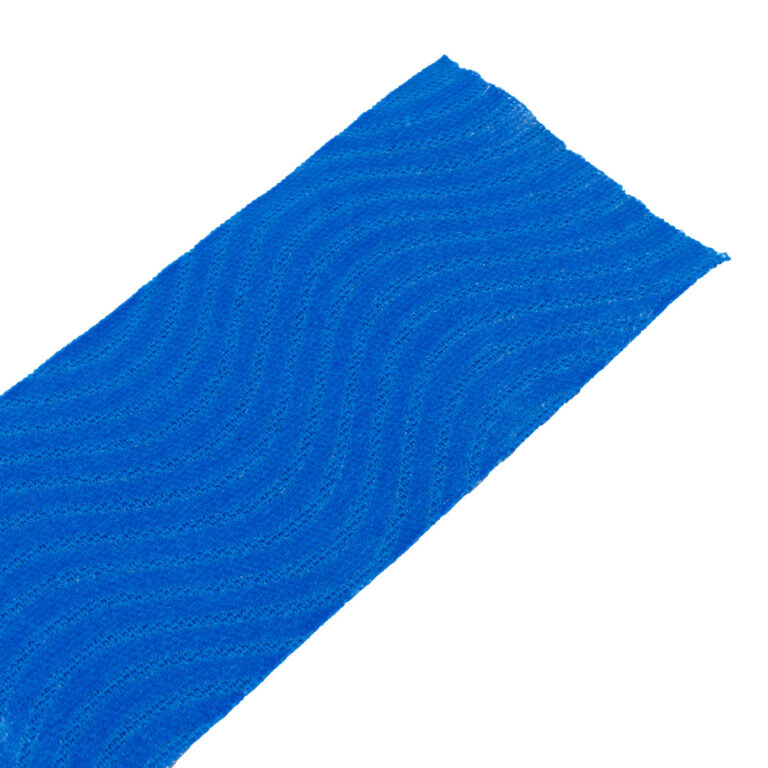
To optimize comfort, our K-Tape is designed with a wavy texture on its adhesive side. This unique feature mimics the texture of the human musculature and helps optimize the patient’s freedom of movement.
Flexibility
The idea behind this design lies in the fact that a wavy texture on the band can not only improve comfort during application and wear, but also promote better adhesion to the skin, while enabling increased flexibility. This wavy band allows greater freedom of movement, following the body’s natural contours without creating uncomfortable pressure points.
Drainage
What’s more, this wavy texture helps increase the effectiveness of K-Tape therapy. It acts as a “map” for subcutaneous tissues, enabling improved fluid circulation and drainage. This can help reduce inflammation and swelling, while facilitating the healing process.
This unique design sets our product apart from traditional, often smooth K-Tape strips, which can sometimes prove uncomfortable or less effective. This feature gives us a significant edge over our competitors and ensures an optimal user experience.
4. Pre-stretching K-Tape strips:
Flexibility and control for customized application
Some brands pre-stretch their K-Tape strips before placing them on the protective paper. This technique involves stretching the belts to a certain proportion of their initial length to give them a pre-defined tension.
However, unlike these brands, our K-Tape is not pre-stretched on the release paper, offering greater flexibility and control during application.
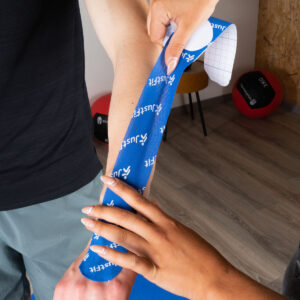
Our approach allows practitioners to tailor band tension to the specific needs of each treatment. This gives you the freedom to adjust the tension precisely to the patient’s anatomy, the condition being treated and the therapeutic objectives being pursued. This increased flexibility ensures optimum adaptation to different clinical situations, while making it easy to cut the strip to the dimensions required for each specific application.
By choosing our non-pre-stretched K-Tape, you benefit from total control over the tension exerted by the band, enabling a more personalized, comfortable application tailored to each patient.
5. Protective paper features :
Easy to apply with no sticky residue
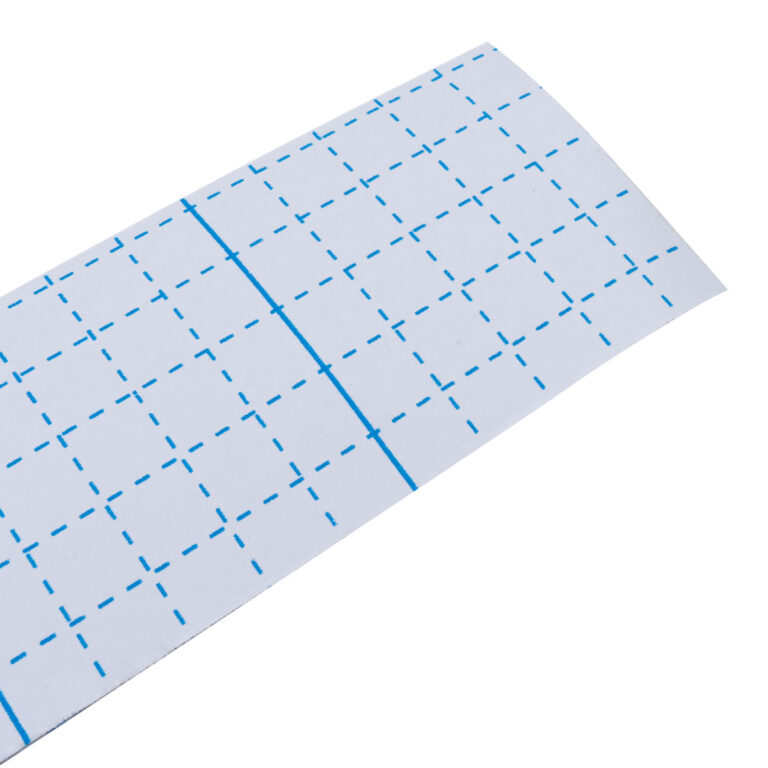
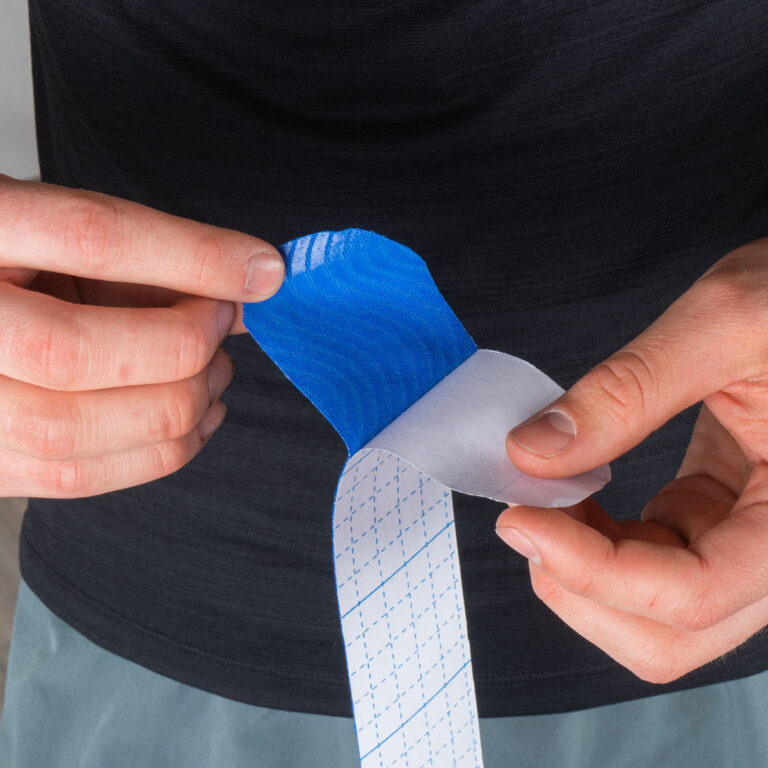
When it comes to choosing K-Tape strips, the quality of the release paper is a crucial factor to consider. Our K-Tape comes with a high-quality wood pulp backing paper, specially designed to facilitate removal without leaving any sticky residue on the tape.
This feature offers several important advantages. Firstly, it ensures a simpler, more pleasant application experience. The protective paper peels off smoothly and easily, enabling smooth handling and precise positioning of the strip on the patient’s skin.
What’s more, the absence of sticky residues on the belt after removal ensures optimum cleanliness. This avoids the unpleasant, uncomfortable sensations caused by persistent adhesive residues on the skin. Patients will enjoy a more pleasant, irritation-free wearing experience.
By choosing our K-Tape with its high-quality release paper, you benefit from more convenient application, easy removal and optimum cleanliness.
6. Type of glue used:
Advantages of Soft Acrylic Glue and other alternatives
When it comes to the type of adhesive used on K-Tape strips, different options are available to meet specific patient needs.
Soft acrylic
We chose a soft acrylic glue, offering both reliable adhesion and optimum comfort.
Acrylic glue offers several key advantages. Firstly, it’s renowned for its strength, durability and water resistance, enabling patients to wear the bandage during their daily activities and even in the shower without fear of it coming off prematurely. What’s more, our acrylic glue is formulated to be gentle, minimizing the risk of skin irritation.
100% hypoallergenic:
It’s important to note that other alternatives exist, adapted to certain specific needs. For example, for people with sensitive skin or allergies, some kinesiology strips use a 100% hypoallergenic glue specially formulated to minimize the risk of allergic reactions. However, it should be noted that this glue may not be as strong or as durable as acrylic glue.
Water-based glue:
Another alternative is to use a water-based glue. These kinesiology strips use a skin-friendly glue, which is generally easier to remove than acrylic glue. However, they may be less water-resistant, which means that the tape may come off more easily when exposed to water.
Each type of adhesive has its own specific advantages, and the choice depends on the patient’s needs and preferences. Our decision to use a soft acrylic adhesive reflects our commitment to quality, comfort and patient safety.
We’ve taken great care to select the type of glue that offers the best combination of reliable adhesion and skin-friendliness, while providing an optimal user experience with our K-Tape strips.
7. Dyes used :
Choose Safe, Non-Irritating Colorants
K-Tape strips can be dyed in a variety of colors, but the color itself has no impact on therapeutic efficacy. When choosing your strips, be sure to opt for non-allergenic, non-irritating dyes.
Some of the dyes used may cause allergic reactions or skin irritation in sensitive individuals.
To ensure patient safety and comfort, it is preferable to select K-Tape strips dyed with safe, non-irritating dyes.
We use non-allergenic, non-irritating dyes in our K-Tape strips, guaranteeing safe, irritation-free contact with patients’ skin.
8. Absorption properties :
Tailored to specific patient needs
K-Tape strips can offer different absorption properties depending on the specific needs of the patient and the environment in which they will be used. Some bands feature a waterproof membrane that prevents water penetration, which can be advantageous in situations where the patient is likely to come into contact with liquids.
In the case of our K-Tape, we’ve developed three levels of waterproof performance with an anti-splash membrane. This unique feature ensures that our K-Tape stays in place even when showering. It offers flexibility and versatility unmatched by other options on the market.
However, it’s also important to consider that other bands can be designed with absorbent power, allowing perspiration to be wicked away and keeping the treated area dry. The choice of absorption strips will therefore depend on the specific needs of the patient and the environment in which they are to be used.
By opting for our K-Tape strips with level-three waterproof performance, we offer a solution tailored to a variety of situations and specific patient needs, giving our product superior reliability and versatility, meeting the highest demands in therapeutic care.
9. Choice of format for kinesiology strips (K-tape)
It largely depends on your personal needs and preferences. Here are some common options and considerations:
Individual rolls : If you use K-tapes frequently, or need specific lengths for certain applications, buying individual rolls may be a good choice. They are generally more economical per metre of strip, and allow you to cut the exact length you need.
Pre-cut : Some brands offer pre-cut strips. These strips are usually of standard length and ready to apply, which can make application easier, especially if you’re new to using K-tapes. However, it should be noted that pre-cut strips can be more expensive per meter of strip than single rolls. In addition, they may not offer the flexibility of individual roll sizes to meet specific needs.
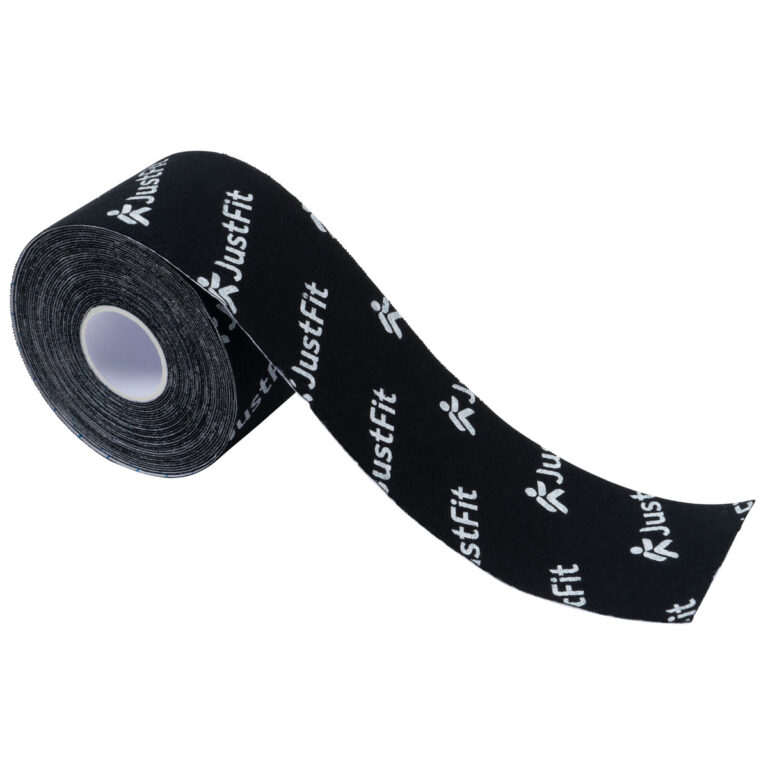
Kits: Some manufacturers offer kits including bands for specific applications, such as the knee, shoulder or back. These kits can include detailed instructions and sometimes even additional accessories such as compression bands or adhesive sprays. Kits may be convenient for targeted use, but they can limit the versatility of size options and be less economical if you need several different sizes or lengths.
Multiple boxes: If you use a lot of K-tapes, you may want to consider buying in bulk. Some brands offer boxes containing several rolls of tape. This can be more economical if you use strips regularly. However, multiple boxes can take up more storage space and are not always suitable for specific size or application requirements.
Each packaging option has its advantages and disadvantages, so it’s important to consider your needs, your budget and the flexibility you require when choosing the solution best suited to your kinesiology practice.
10. Quality packaging to preserve the effectiveness of your K-tape strips
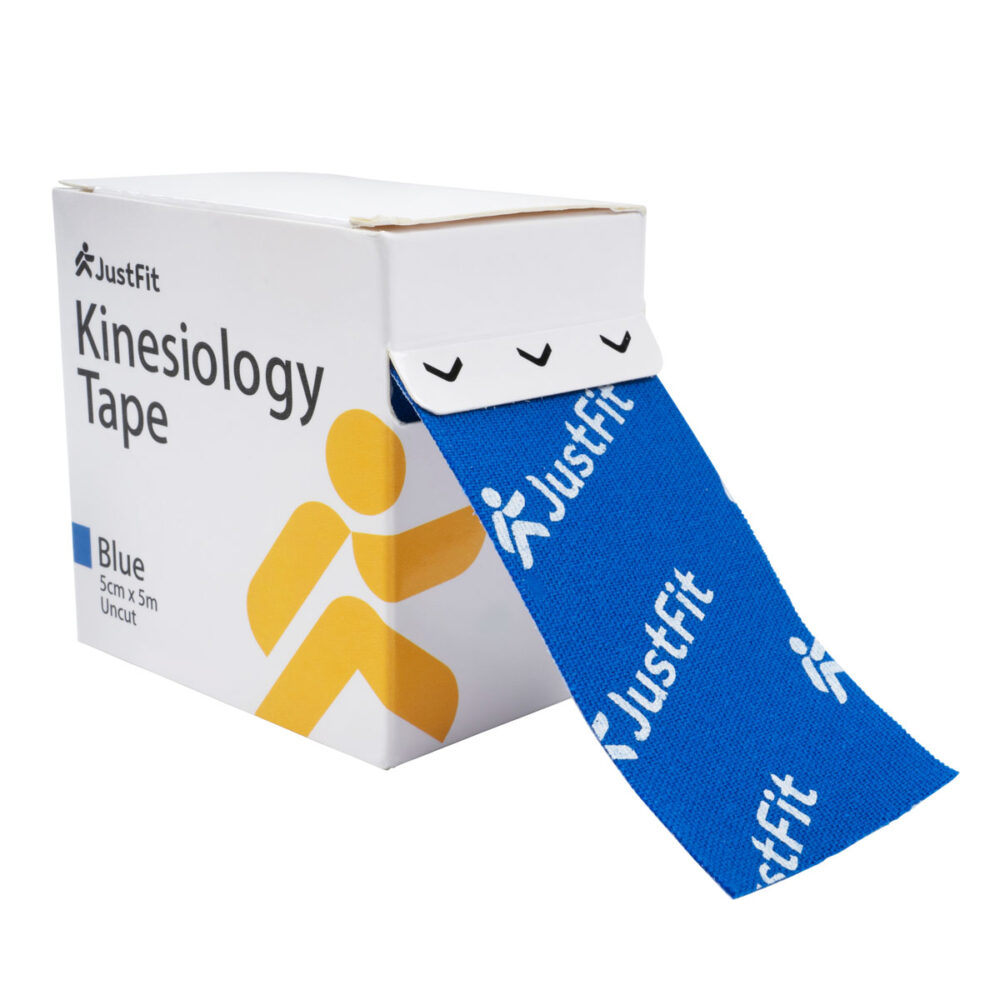
It is also essential to consider the quality of the packaging itself. Make sure it effectively protects the tape from moisture and sunlight, which can degrade the adhesive and alter the quality of the tape material. Good quality packaging will ensure that your K-tapes remain in perfect condition until you need them, prolonging their life and efficiency.
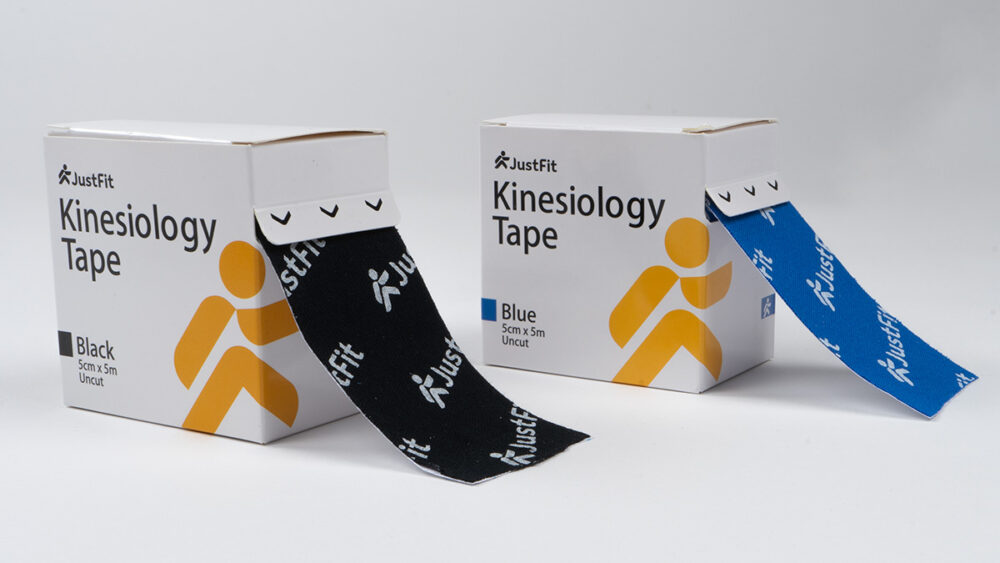
With this in mind, our packaging is specially designed to meet these needs. It offers optimum protection against moisture and UV rays, preserving the quality of our K-tape strips. What’s more, our packaging is equipped with an integrated unwinder, making it easy to cut strips precisely and conveniently to your specific requirements. This feature saves you time and ensures that our products remain practical and hygienic to use.
When you choose our K-tape with our high-quality packaging, you benefit from a complete solution that combines optimum protection, ease of use and preservation of the quality of our tapes right up to the point of use.
Conclusion:
The choice of K-Tape is a crucial element in physiotherapy practice. By considering criteria such as composition, elasticity, texture, pre-stretch, protective paper quality, adhesive type, dyes, absorption properties and recommended application time, physiotherapists can select the most suitable K-Tape for each clinical situation. It is essential to take into account the patient’s specific needs, treatment characteristics and the manufacturer’s recommendations to ensure optimal results when using K-Tape.