- Sports tips
Complete guide to kettlebells: exercises, benefits and how to choose
Ready for a new sporting challenge? Kettlebells are the perfect tool for getting out of your comfort zone and pushing your limits. Ubiquitous in almost all gyms, these versatile weights will enable you to work your whole body in a fun and effective way. Combining strength, cardio and coordination, they offer a multitude of ways to improve your physical condition.
In short, kettlebells enable you to work several muscle groups at the same time, burn maximum calories and improve your functional strength. Whether you’re a beginner or an expert, this tool can transform your approach to fitness.
So, what exercises can you do with kettlebells? What criteria should you take into account when choosing this accessory? In this guide you’ll find all our advice on how to use kettlebells to achieve impressive results.
In this guide, you’ll find all the exercises you need to incorporate into your routine to prepare your body for the slopes. Also check out our tips on how to avoid skiing-related injuries and pain.
Table of Contents
The benefits of kettlebells
Simultaneous cardio and muscle strengthening
Kettlebells are formidable allies when it comes to combining two objectives: strength training and cardio. With dynamic exercises like the swing, you engage several muscle groups at the same time, especially the muscles of the posterior chain, such as the back, glutes and hamstrings. This explosive movement also increases your heart rate, making it an excellent cardiovascular exercise. By integrating kettlebells into your workouts, you optimize your time while enjoying a complete workout that builds strength and endurance.
Versatile exercise options
Few pieces of training equipment offer such a variety of movements as kettlebells. You can use them for ballistic exercises like swings and snatches, static movements like squats or deadlifts, or complex exercises like the Turkish get-up. This versatility means you can tailor your sessions to suit your goals, whether they are to lose weight, gain strength or work on coordination. What’s more, kettlebells are suitable for beginners and experienced athletes alike.
Functional strength gains
One of the special features of kettlebells is their offset center of gravity, which creates instability during movement. This forces your body to work the stabilizing muscles and maintain constant control. This enables you to develop the functional strength you need to perform everyday tasks, such as carrying loads or lifting objects, as well as your sporting performance. This comprehensive approach helps you build a balanced, resilient body.
Essential kettlebell exercises
Swing kettlebell
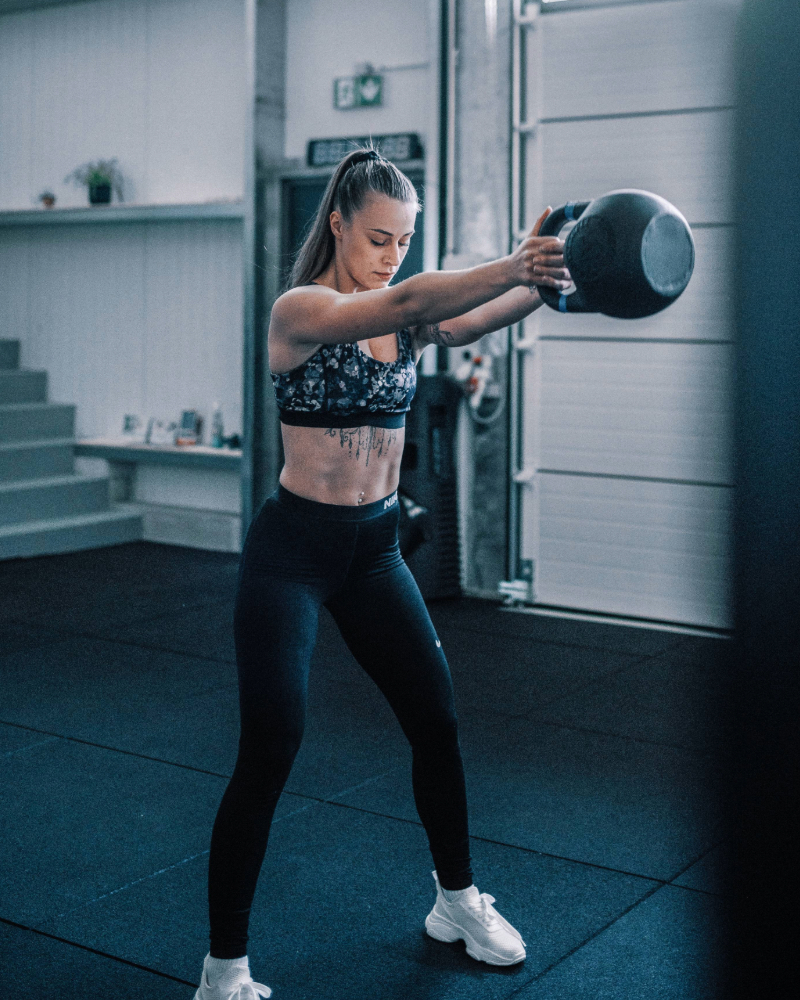
The kettlebell swing is the essential exercise for harnessing the power and versatility of this equipment. Mainly focused on the posterior chain (back, glutes, hamstrings), it also improves explosiveness and cardio conditioning. To do this :
- Stand with your feet shoulder-width apart and the kettlebell on the floor in front of you.
- Grasp it with both hands, bend your knees slightly, and swing the kettlebell between your legs, engaging your hips.
- In an explosive movement, throw it up to shoulder height while contracting the muscles of the lower body and trunk.
Goblet squat
The goblet squat is the ideal exercise for strengthening the legs and improving hip mobility. To do this :
- Hold the kettlebell in front of your chest with both hands, as if you were holding a cup.
- Slowly descend into a squat, keeping your back straight and your elbows close to your body.
It’s an accessible, yet formidably effective exercise for targeting the quadriceps, glutes and trunk, while promoting greater range of motion.
Clean and press
The clean and press is an exercise that combines strength and explosiveness. To do this :
- Start with the kettlebell on the floor. Pull it back to shoulder height.
- Then push it over your head.
This sequence stimulates shoulders, arms, trunk and even legs, while improving coordination.
Turkish get-up
The Turkish get-up is a complete exercise, perfect for developing strength, balance and coordination. To do this :
- Lie on your back with the kettlebell in one outstretched hand
- Slowly rise to a standing position.
This exercise engages the whole body and strengthens the stabilizers.
Deadlift
The kettlebell deadlift is ideal for strengthening the lower back, glutes and hamstrings. To do this :
- With an upright posture, pick up the kettlebell from the floor, bending your knees slightly.
- Then straighten up by contracting your hips.
This simple yet powerful movement is a pillar of muscle strengthening.
How do you choose your kettlebells?
Ideal weight for beginners, intermediates and advanced users
Choosing the right kettlebell weight is essential if you want to progress safely and effectively. Here are some recommendations depending on your level:
- Beginners : Kettlebells 8-12 kg for men, 4-8 kg for women.
- Intermediates 12-20 kg for men, 8-12 kg for women.
- Advanced 20 kg and over, depending on your level of strength and experience.
Material and finish: cast iron, vinyl or competition
- Cast-iron kettlebells Cast-iron kettlebells: affordable and durable, they’re a good choice for beginners.
- Vinyl kettlebells They offer a colorful finish and protect your floor. They are ideal for domestic use.
- Competition kettlebells Made of steel, these kettlebells are uniform in size, whatever their weight. They are ideal for experienced athletes.
Purchasing tips
Here are a few things to check before choosing your kettlebell:
- Handhold Make sure the handle is comfortable and wide enough for a two-handed grip.
- Stability Opt for a flat base to ensure that the kettlebell remains stable during exercise.
Tips for integrating kettlebells into your program
Training ideas for beginners
To get started with kettlebells, it’s important to focus on simple, effective movements. Here is an example of a circuit accessible to all:
- Swing kettlebell 10 repetitions. This movement activates your posterior chain and raises your heart rate.
- Goblet squat 10 repetitions. It strengthens your legs and improves your mobility.
- Clean and press 5 repetitions per arm. This combo challenges your shoulders, arms and core.
- Turkish get-up 2 repetitions per side. Ideal for working on coordination and strengthening the whole body.
- Deadlift 10 repetitions. This exercise strengthens the lower back, glutes and legs.
Make this circuit 3 timestaking 1 minute rest between rounds. Focus on quality of movement rather than speed.
Common mistakes to avoid
To get the most out of your sessions, here are some common mistakes to avoid:
- Choosing a weight that’s too heavy This can compromise your technique and increase the risk of injury. Starts light and gradually increases.
- Neglecting the warm-up Warm-up: Prepare your body with 5 to 10 minutes of dynamic exercises such as hip rotations or light jumps.
- Adopting the wrong technique Make sure your posture is correct and master the movements before accelerating or adding weight.
These tips will help you progress efficiently and avoid injury.
Kettlebells are sports accessories with many advantages. You can use them to strengthen your body, improve your cardio and vary your fitness sessions. Whether you’re a novice or a seasoned athlete, there are a multitude of exercises and programs to suit your level. So, are you ready to work on your endurance and coordination? Grab your kettlebell and start your fitness adventure today!