


- Sports tips
How to slim down with bodybuilding
Weight training, like many other sports, helps you lose weight. Nevertheless, many people think that weight training is only for gaining muscle and not for losing fat or the majority of them only focus on the cardio area.
Which isn’t totally wrong in itself, but it’s a shame to limit your training to the treadmill, rowing machine or elliptical. Indeed, you should not be afraid to lift weights. These will not only help you slim down, but also sculpt your figure.
The benefits of weight training for weight loss
Increasing basic metabolism through weight training
One of the main benefits of weight training for weight loss is theincrease in basal metabolic rate. Basal metabolic rate refers to the amount of energy your body expends at rest to maintain vital functions such as breathing, digestion and body temperature regulation. When you build muscle mass through weight training, you increase your basal metabolic rate, which means your body burns more calories, even at rest. As a result, you can lose weight more effectively, as your body burns more fat throughout the day.
The importance of polyarticular exercises for slimming down
Losing 5kg is great, but losing 5kg while regaining a toned figure is even better. To achieve this, polyarticular exercises are the key to your success. Polyarticular exercises, also known as compound exercises, are movements that call on several muscle groups and joints simultaneously. When you perform these exercises, you engage many muscles at once. This increases the intensity of your workout and boosts your metabolism. This leads to increased calorie burning and higher energy expenditure during and after training. Multi-joint exercises such as squats, deadlifts, bench presses, pull-ups, etc., are particularly effective in helping you lose weight and refine your figure. By including them in your training program, you’ll be able to develop harmonious muscles by working several areas of your body simultaneously. This gives you a more toned, slender appearance.
Comparing cardio and strength training for weight loss
Effects of cardio-training on metabolism
Cardio-training, also known as cardiovascular or endurance training, has several effects on metabolism. This exercise promotes :
- Increased energy expenditure: When you engage in cardiovascular activity, such as running, cycling or swimming, your body needs more energy to sustain the physical effort. This leads to an increase in energy expenditure. As a result, your metabolism speeds up, which means your body burns more calories at rest.
- Improving aerobic capacity: Cardio-training improves aerobic capacity. This means your body’s ability to use oxygen efficiently during exercise. This translates into better use of fat as an energy source during physical activity. By strengthening your cardiorespiratory system, you help regulate fat metabolism. This also allows more efficient use of these reserves during exercise.
- Acceleration of basic metabolism: Regular cardiovascular training can increase basal metabolic rate. This refers to the amount of energy your body expends at rest to maintain its vital functions. The increase in basal metabolic rate results from your body’s adaptation to cardio effort, which requires higher energy expenditure even at rest. So even after you’ve finished your workout, your metabolism stays stimulated and continues to burn extra calories.
- Reducing body fat: Regular cardiovascular training can help reduce body fat. Cardio activity promotes energy expenditure and the use of fat as an energy source. With regular practice, combined with a balanced diet, cardio-training can help you lose weight and reduce body fat.
Long-term effects of weight training on metabolism
Weight training has significant long-term effects on metabolism. It contributes to :
- Building muscle mass: Bodybuilding aims to strengthen and develop the body’s muscles. These are metabolically active tissues. This means they burn more calories than other tissues, even at rest. So, as you build muscle mass, your basal metabolic rate increases. This translates into an increase in daily energy expenditure.
- The thermogenic effect of exercise: when you engage in intense bodybuilding sessions, your body has to work hard to recover and repair itself. This requires additional energy expenditure to support the recovery process. This thermogenic or afterburner effect translates into increased energy expenditure after training. So even after you’ve finished your workout, your metabolism remains high and continues to burn extra calories.
- Insulin regulation: Regular weight training can improve insulin sensitivity. This hormone is involved in regulating carbohydrate and fat metabolism. Reduced insulin sensitivity can lead to insulin resistance and blood sugar regulation problems. By strengthening your muscles and improving this sensitivity, weight training can promote better blood sugar regulation and more efficient carbohydrate metabolism.
- Maintaining lean muscle mass during weight loss: When you’re trying to lose weight, the body tends to lose both fat and muscle mass. Strength training can help preserve lean muscle mass during weight loss. By maintaining good muscle mass, your metabolism stays high. This facilitates weight loss and long-term maintenance.
Advantages of combining weight training and cardio training
Combining weight training and cardio-training in your workout program offers numerous benefits for your health and fitness. In fact, the combination of these 2 types of exercise promotes :
- Effective weight loss: The combination of strength training and cardio-training is particularly effective for weight loss. Cardio-training helps burn calories during training, promoting immediate energy expenditure. On the other hand, weight training increases muscle mass. This boosts metabolism over the long term. By combining the two, you can maximize energy expenditure, burn fat and promote weight loss.
- Improving body composition: Strength training and cardio combined help improve body composition. Together, they reduce body fat and increase muscle mass. Cardio-training helps to burn fat, while strength training promotes the development of toned muscles. They help you look firmer, more sculpted and more athletic.
- Muscular and functional strengthening: Strength training is essential for strengthening and developing muscles. This improves strength, endurance and stamina. Cardio-training improves cardiovascular endurance and respiratory capacity. Combining the two types of training develops overall fitness, strengthening muscles, heart and lungs. This improves physical performance in daily activities and other sports.
- Cardiovascular health: Cardio-training has a significant impact on cardiovascular health. It improves the efficiency of the cardiovascular system, lowers blood pressure and raises levels of good cholesterol. Weight training, while not directly focused on cardiovascular health, can also offer indirect benefits. It contributes to weight loss, blood glucose management and insulin regulation. This has a positive impact on overall cardiovascular health.
Weight training program for slimming
Introduction to a half-body training program in the weight room
This training program can be reproduced for weight loss. It’s based on a half-body workout with two sessions a week, the first dedicated to the upper body and the second to the lower body, plus a third session devoted to cardio. Depending on your preference, you can do a HIIT workout by running, elliptical or even swimming.
Session 1: Upper body (detailed exercises)
- Pull-ups – 4 sets of 8 repetitions : Develop strength and muscle mass in the back, particularly the muscles of the lats and arms. Use a fixed pull-up bar or pull-up machine to perform the exercise.
- Lateral raise – 4 sets of 10 repetitions : This exercise targets the lateral deltoid muscles, located on the sides of the shoulders. Use light to moderate dumbbells and perform a controlled lateral raise, keeping your arms slightly bent.
- Bench press – 4 sets of 12 repetitions: The bench press is a classic exercise for working the pectoral muscles, triceps and front shoulders. Lying on a bench, hold a barbell or dumbbells above your chest and slowly lower them down until your elbows reach an angle of about 90 degrees. Then push them upwards, contracting your pectoral muscles.
- Dumbbell snatch – 4 sets of 15 repetitions : This exercise stimulates the muscles of the shoulders, arms and upper back. Hold a pair of dumbbells in front of your thighs with a neutral grip. Keeping your arms straight, lift the dumbbells in an arc until they reach shoulder height, then lower them in a controlled manner.
- Dips – 4 sets of 12 repetitions: Dips are excellent for developing arm muscles, especially the triceps, pectorals and front shoulders. Use parallel bars or a dips machine. Place your hands on the bars, lower your body by bending your elbows until your arms are bent at about 90 degrees. Then push your body upwards to return to the starting position.
- Gainage & Vacuum – 5 sets : Sheathing is an exercise to strengthen the abdominal muscles and core. Adopt a plank position, keeping your body upright and contracting your abdominal muscles. Hold this position for a few seconds for each set. Next, practice the vacuum, which consists of contracting the abdominal muscles and drawing the abdomen inwards. Hold this contraction for a few seconds with each series.
Session 2: Lower body (detailed exercises)
- Squat – 4 sets of 8-10-12-15 repetitions: The squat primarily targets the leg muscles, including the quadriceps, hamstrings and glutes. Start with an appropriate weight on a bar placed on your shoulders, and lower yourself by bending your knees and hips until your thighs are parallel to the ground. Then push up through your heels.
- Deadlift – 4 sets of 8 repetitions : The deadlift mainly involves the back, hamstrings, glutes and front thigh muscles. Place a bar in front of you, bend over with your back straight and grasp the bar with a pronated grip. Using your legs and hips, pull yourself up by lifting the bar until you are in a standing position. Then lower the bar.
- Walking lunges – 4 sets of 12 repetitions : Walking lunges work the leg muscles, particularly the quadriceps, hamstrings and glutes. Take a large step forward with one leg, bending the knees to descend until both knees are bent at 90 degrees. Then return to the starting position by pushing through the front heel.
- Thigh press – 4 sets of 10 repetitions : The thigh press primarily targets the quadriceps. Sitting on a thigh press machine, push the platform outwards using leg strength. Then return to the starting position t.
- Hip Thrust – 4 sets of 10 repetitions : The Hip Thrust targets the gluteal muscles. Sitting with your back against a bench, place a loaded barbell on your hips. Using your glutes, push your hips upwards, creating a straight line from your shoulders to your knees. Descend in a controlled manner.
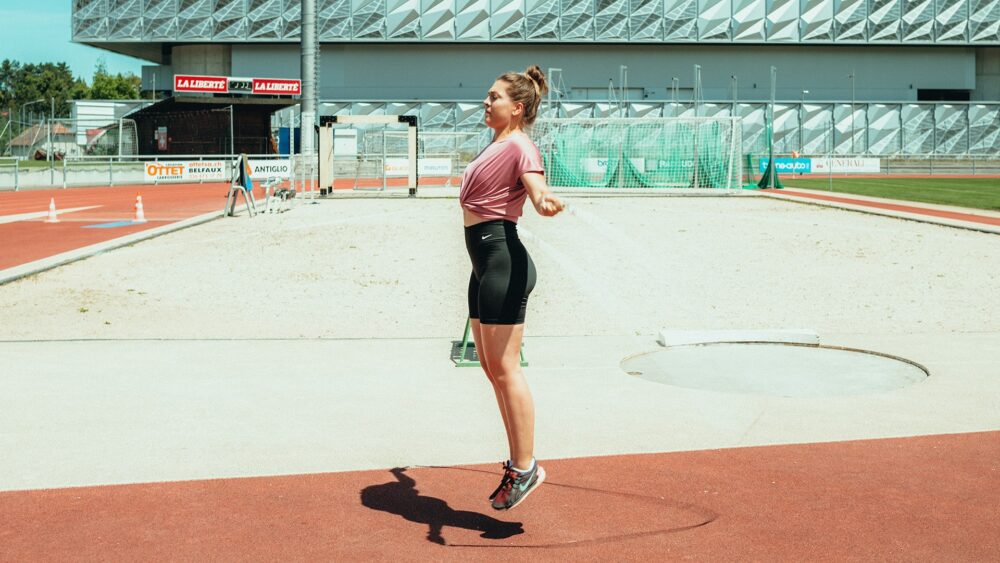
- Skipping rope – 10 sets of 30 seconds: Skipping rope helps improve coordination, endurance and caloric expenditure. Jump at a moderate pace for 30 seconds, then rest for a short time before starting the next series.
A session devoted to cardio-training
-
HIIT workout (Running):
do a full-intensity sprint for 30 seconds. Alternate with walking or light jogging for 1 minute. Repeat this pattern of sprinting and active recovery for 10 to 15 minutes.
Discover this article on how to do a HIIT workout effectively. - Elliptical trainer: Pedal at a steady pace and high resistance for 1 minute. Reduce resistance and pedal at a slower pace for 1 minute. Repeat this pattern of high and low resistance for 10 to 15 minutes.
- Swimming: Swim at an intense pace for 1 minute using different strokes (crawl, backstroke, breaststroke, etc.). Switch to a slower stroke for 1 minute. Repeat the exercise for 10 to 15 minutes.
The importance of a low-calorie diet for weight loss
To lose weight, your diet will play a crucial role. How will it help you lose weight?
Determining daily calorie requirements
When you’re trying to lose weight, it’s essential to understand your daily calorie requirements. This means determining how many calories your body needs to maintain its current weight. You can use calculators or consult a health care professional for a rough estimate. Once you have this estimate, you can create a caloric deficit by consuming fewer calories than your body needs. This will promote weight loss.
Distribution of macronutrients in a low-calorie diet
A balanced, low-calorie diet should be made up of essential macronutrients: proteins, carbohydrates and fats. Protein helps maintain muscle mass while promoting satiety. Carbohydrates provide energy and should be chosen from quality sources. Choose from vegetables, fruit and wholegrain cereals. Healthy lipids, such as unsaturated fatty acids, should be included in moderate quantities. Make sure you have between 1.5 and 2g of protein per kilo of body weight, as well as 1g of lipids per kilo of body weight. The rest of the calories will be supplemented by quality carbohydrates.
Adopting progressive dietary changes
It’s important to make gradual, lasting changes to your diet. Rather than following drastic short-term diets, it’s better to focus on lasting dietary adjustments. Start by reducing portions, eliminating foods rich in empty calories (such as sugary drinks and unhealthy snacks). Focus on nutritious, low-calorie foods. Gradually include more vegetables, lean proteins and fibre in your meals. Allow yourself some pleasures and don’t try to have a 100% perfect diet.
The importance of hydration for weight loss
Hydration is crucial to weight loss. Drinking enough water helps keep your metabolism working properly, promotes satiety and can reduce cravings. It alsoeliminates toxins from the body, helps the kidneys to filter and cleanses waste from the blood. In addition to water, you can drink herbal teas, unsweetened green tea and herbal infusions to stay hydrated. Avoid sugary drinks and soft drinks. They add calories without nutritional value.
Techniques to speed up refining
Integrating intermittent fasting into the program
Intermittent fasting involves regulating fasting and meal periods. There are different approaches, such as fasting for 16 hours with an 8-hour feeding window, or fasting for 24 hours once a week. Intermittent fasting can help create a caloric deficit by limiting the amount of time you consume calories. It can also promote insulin regulation, stimulate fat burning and improve insulin sensitivity.
Using supersets to train intensively
Supersets consist of linking two exercises with no significant rest period in between. This keeps the heart rate up, increases workout intensity and stimulates calorie burning. For example, you can perform an upper-body exercise such as pull-ups, followed immediately by a lower-body exercise such as lunges. This approach makes it possible to work several muscle groups at the same time and maintain a cardiovascular effort.
The importance of rest and recovery to avoid overtraining
When you’re looking to speed up your slimming process, it can be tempting to train intensively every day. However, rest and recuperation are essential to allow your body to recover, rebuild and adapt to physical exertion. Overtraining can lead to injury, diminished performance and a slower metabolism. Make sure you include rest days in your training schedule, get enough sleep and give your body time to recover between workouts.
Discover the GladiatorFit products adapted to these exercises
GladiatorFit offers you a whole range of products to help you perform these exercises. Below is a list of articles we recommend to help you carry out your session as efficiently as possible.


