- Buying guide
K-tape Buying Guide for Physiotherapists: Choose the Best Fit
As physical therapists, you are constantly looking to improve your practice to provide the best possible support to our patients. In this context, the use of the kinesiology tape or K-tape has revolutionized the way we approach rehabilitation and muscle support. Whether it’s to relieve pain, improve circulation or promote recovery from injury, the K-tape has become an indispensable tool in our therapeutic arsenal. But did you know that the way you cut and apply your K-tape can have a significant impact on its effectiveness?
This article is intended to guide you in the selection and application of different K-tape cuts to optimize the therapeutic benefits for your patients. We will introduce you to the different cuts, their advantages, the areas of the body where they are generally used, the instructions to perform them and the precautions to take. We will discuss the I-cut, the Y-cut, the fan-shaped, the spider’s web, the “Ram’s Head”, the “Donut Hole”, the “Medusa” and the “Basket Weave”.
Each type of cut has its own specificities and can be adapted to suit the patient’s needs.
So, whether you’re a novice practitioner looking for tips on getting started with the K-tape, or an experienced physiotherapist looking to expand your knowledge, this guide is for you. Get your scissors and K-tape ready, and let’s dive into the fascinating world of kinesiology taping.
Different cuts for your K-tape
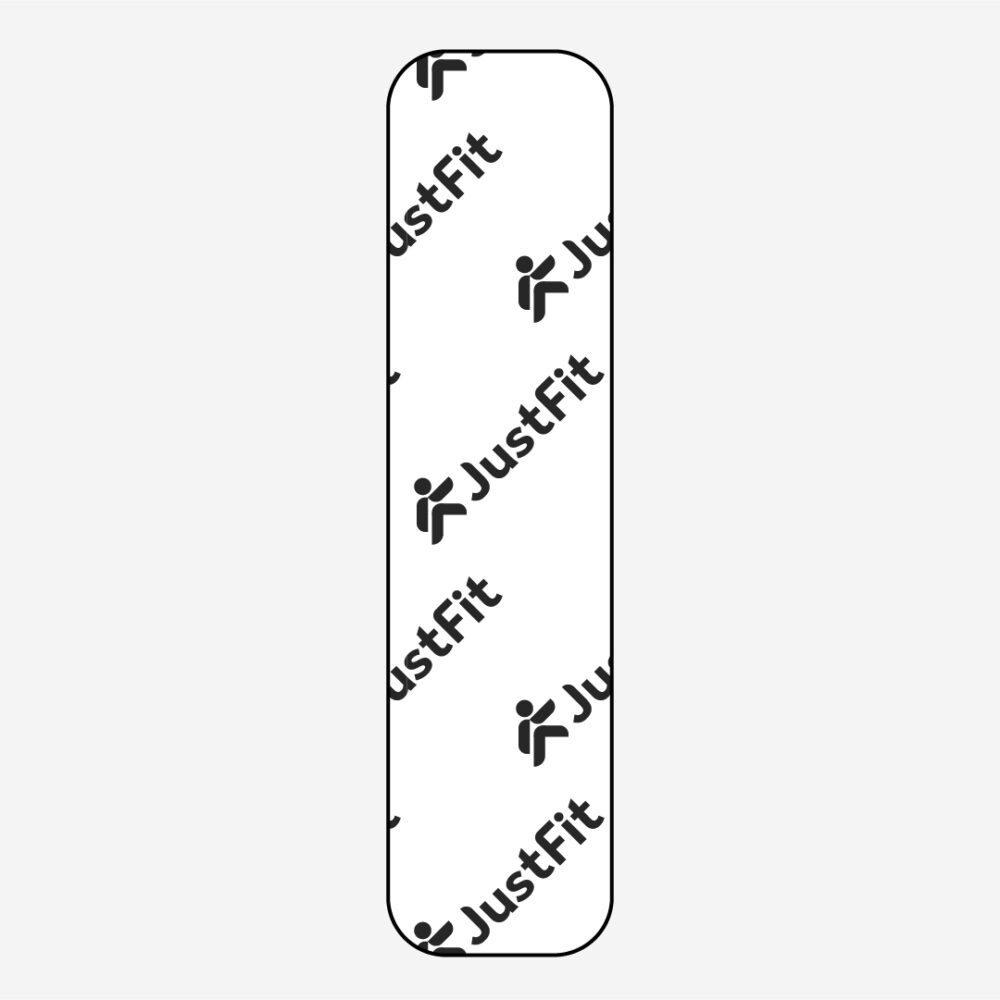
The I-shaped model
Therapeutic use: This design provides generalized support and stabilization of muscles, tendons and ligaments.
Body zones: often used for bandaging protocols for the long biceps tendon, Achilles tendon, quadriceps and gluteal muscles.
Cutting guide: Calculate the required ribbon length. It is recommended to round the edges to prevent premature detachment.
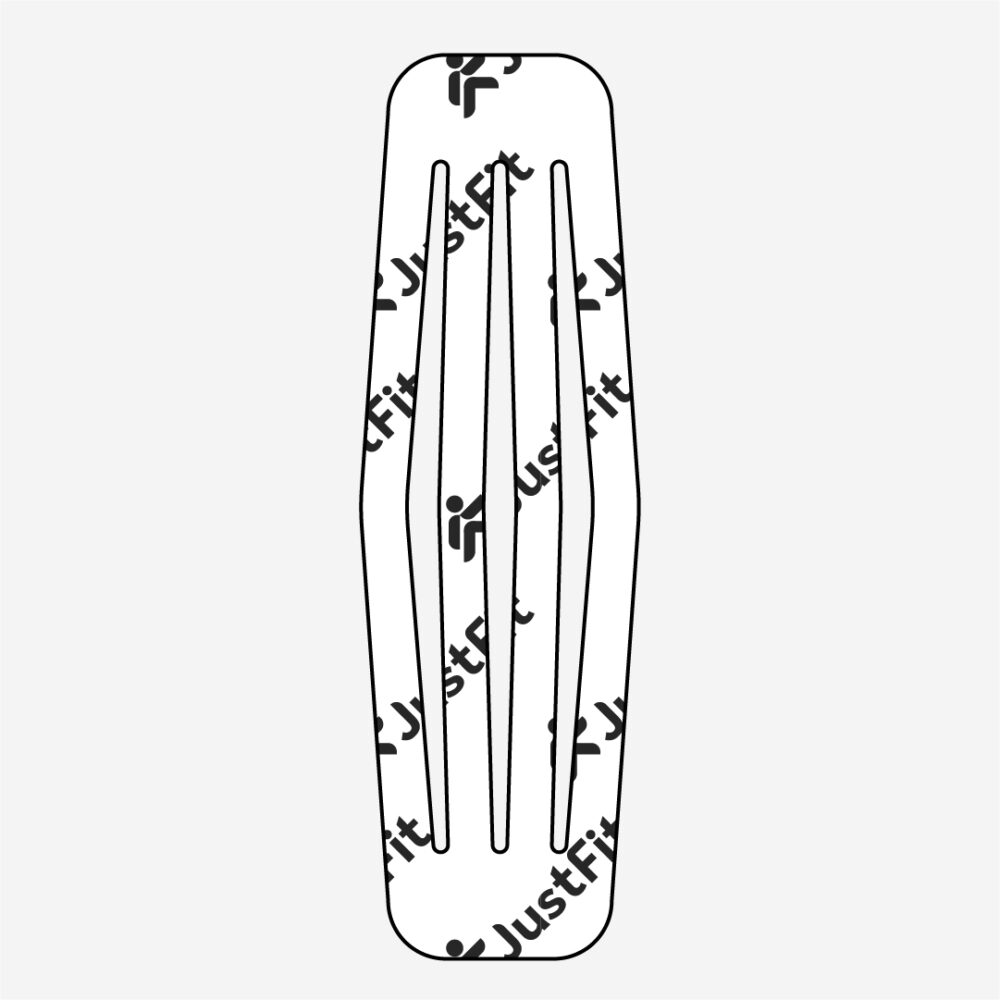
The web cut
Therapeutic use: It relieves pressure on the swollen area, promoting lymphatic drainage and providing effective relief.
Body zones: This cut is often used for sensitive areas and requires precise application.
Cutting guide: Calculate the required tape length and cut an I-shaped strip. Determine the number of cuts required and the length of the base.
To make cutting easier, fold the strip in half. Follow the lines on the back of the ribbon to make more accurate cuts. Round the edges.

The fan cut: (fan cut)
Therapeutic use: This design is used for lymphatic drainage to reduce swelling and edema.
Body zones: Often used for lymphatic bandages.
Cutting guide: Calculate the required length of tape and cut an I-shaped strip.
For ease of cutting, some kinesiology tapes have grid lines on the back. Follow these lines to make vertical fan cuts. Round the edges of the base and each edge of the fan.
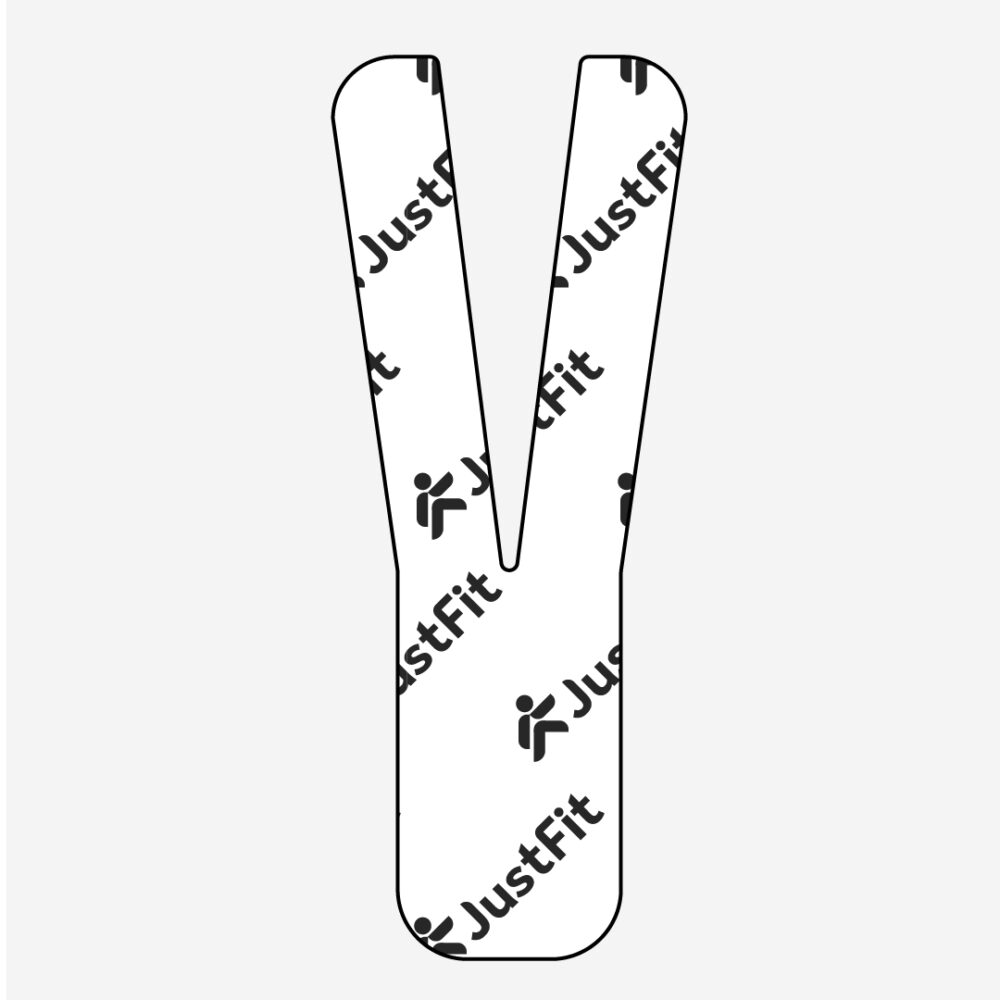
The Y-shaped cut (called ram’s head):
Therapeutic benefits: This design provides specific support and stabilization while allowing a range of natural movements.
Body zones: Particularly suitable for delicate areas of the body, such as the front of the elbow and the back of the knee. It is also used for bandaging protocols to control the position of the patella.
Cutting guide: Calculate the required ribbon length and cut an I-shaped strip. Determine the length of the base and tails of the Y-cut. Then cut the strip vertically to create two tails. Round the edges of the base and tails.
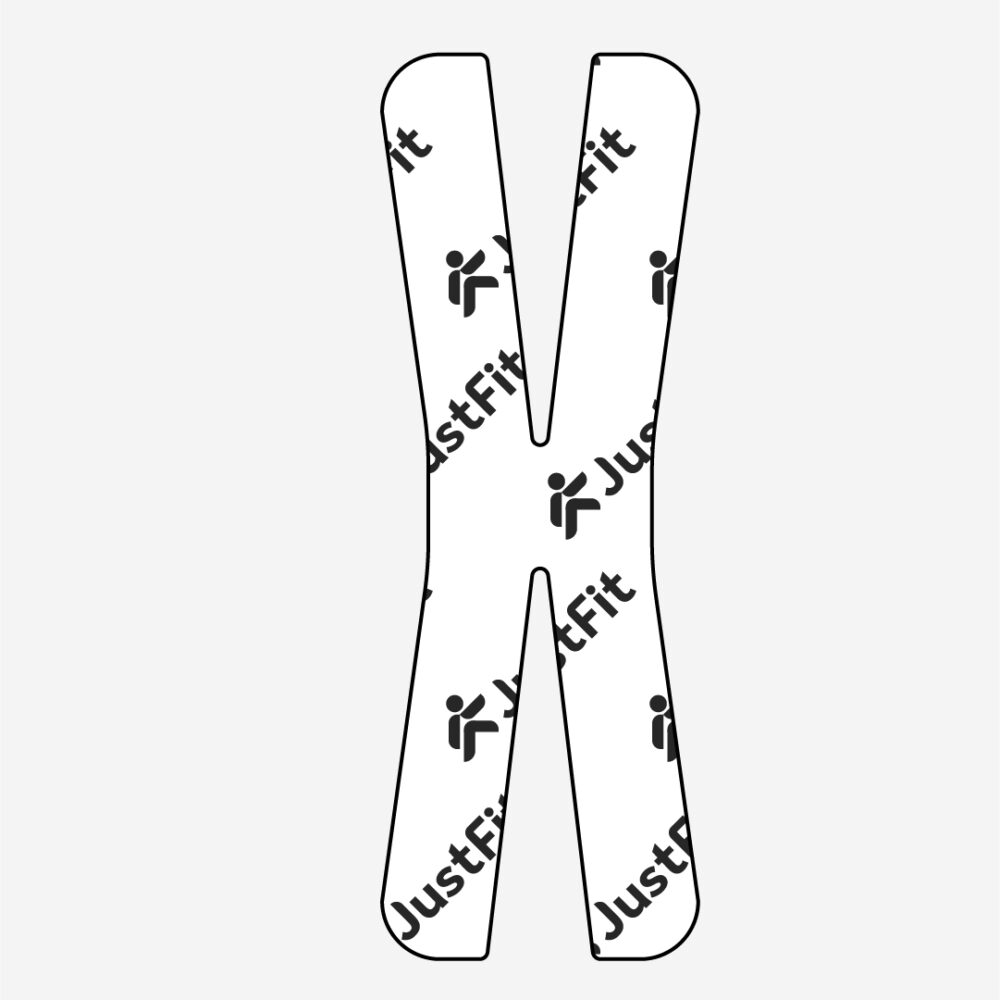
The X-cut :
Therapeutic use: This model is used to provide targeted support and stabilization to areas of the body requiring multidirectional mobility.
Body zones: often used on complex joints, such as the knee or shoulder, or to bandage interconnected muscles, such as the forearm or back.
Installation guide: Calculate the desired ribbon length and cut an I-shaped strip. Then determine the position of the cross center. From this point, make two diagonal cuts to create four branches. Make sure the cuts are symmetrical to achieve a balanced X layout. Round off the ends of the branches to prevent premature detachment.
Different poses for your K-tape
X-shaped installation with a central hole: (donut)
Therapeutic benefits: It is commonly used for sensitive areas of the body, such as the back of the knees and elbows. It allows to cross several joints and can cover large areas of the body. The center hole pose is used to inhibit used or overstretched muscles.
Body parts: commonly used on knees, elbows and any other large body surface that needs extra support.
Cutting instructions: Measure the desired strip length and cut an I-shaped strip. Fold the strip in half and make a cut between the two ends to obtain four tails – two tails on each side. Round the edges of the tails. To create a center hole, fold the ribbon in half and cut a hole the right size for the body part it will be used on.
U-shaped installation:
Therapeutic benefits: The U-cut is used to relieve pressure on a specific area of the body, such as the calf muscles or Achilles tendons. It is often used to relieve pain and promote recovery in areas where excessive compression can be detrimental.
Body parts: commonly used for areas where excessive compression can be harmful, such as calf muscles or Achilles tendons.
Cutting instructions: Measure the length of tape needed to wrap around the target area in a U-shape. Cut a strip of kinesiology tape this length. Apply the strip in a U shape around the area to be treated. Make sure the pressure is sufficient to relieve pain, but not excessive to avoid excessive compression.
Choosing the best K-tapes for your cuts
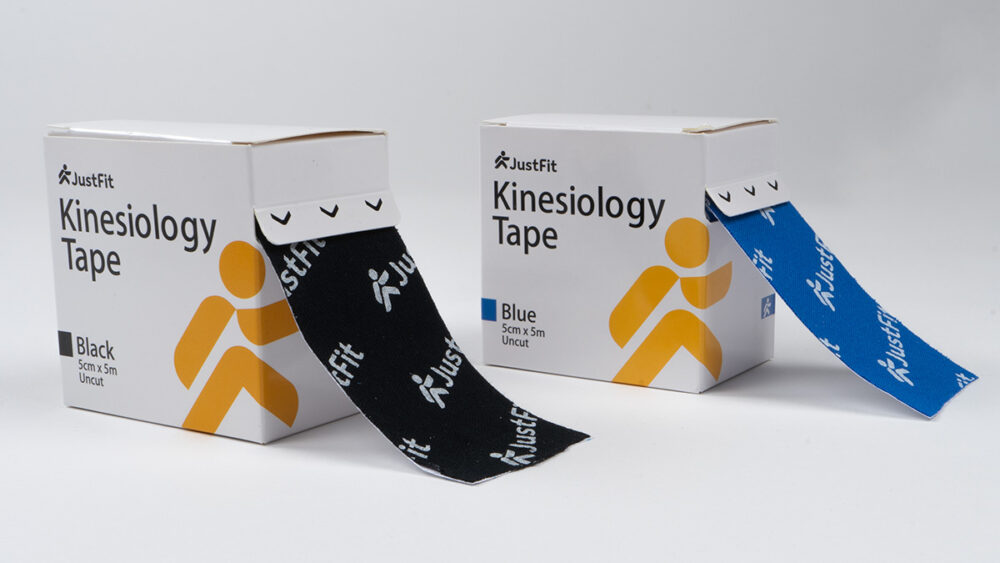
Now that you’ve mastered the art of K-tape cutting, it’s essential to invest in the right equipment to guarantee the efficiency of your applications. Our K-tape, made from 96% cotton and 4% spandex, is designed to meet these requirements.
Material
Spandex offers optimal elasticity that not only makes it easy to apply, but also to cut the tape. Indeed, the elasticity allows a clean and precise cut, for a perfect fit on the target area.
Pre-stretching
In addition, our K-tape strips are not pre-stretched on the backing paper, giving you more control when cutting. You can precisely adjust the length and shape of the tape to accommodate different cutting techniques without worrying about tearing or stretching.
Ktapes glue
As for the adhesive, we use an acrylic glue, whose strength and adherence allow the tape to stay in place during the activity, without hindering the cutting. In addition, the wavy texture of the adhesive side improves grip on the skin, making it easier to apply after cutting.
Water resistance
Our K-tape is water resistant, ensuring its durability even in wet conditions. This means your cuts won’t be compromised by sweat or moisture, and the tape will stay in place as intended.
In conclusion, mastery of K-tape cutting is key to maximizing its therapeutic benefits. However, without a quality K-tape, even the most precise cuts won’t reach their full potential. When you choose our K-tape, you’re investing in a top-quality product that makes cutting easier and optimizes the efficiency of your applications.