


- Sports tips
Bodybuilding pullover: an exercise for working several muscle groups
One of the main reasons for this controversy is the risk of shoulder injury associated with this exercise. Indeed, the pullover requires you to place your body in an uncomfortable position, while moving a heavy weight with your arms fully extended over your face. This can put excessive pressure on the shoulder and increase the risk of injury.
Despite these concerns, it’s important to stress that shoulder problems can be avoided by working on the mobility of this joint as well as the upper back. By developing adequate flexibility and good technique, it’s possible to considerably reduce the risk of injury while enjoying the many benefits offered by the pullover in bodybuilding.
Muscles involved in bodybuilding pullovers
The muscles involved in the pullover are varied and include several important muscle groups. Here’s an overview of the main muscles involved in this versatile exercise:
The dorsalis major
When you do the pullover, you’re intensely exercising your lats, one of the most important muscles in your back. It’s responsible for extending your shoulder. By performing the pullover correctly, you can develop and strengthen your lats, contributing to better posture and a seemingly wider back. Make sure you maintain good form and concentrate on the contraction of your lats during the movement. This will not only improve the aesthetics of your back, but also increase the stability and functionality of your upper body. By regularly working your lats with the pullover, you can maintain a healthy, balanced posture, while promoting harmonious muscle development in your back.
The triceps brachii
The pullover also involves the triceps brachii, the muscles at the back of your arms. When you extend your arms above your head during the exercise, your triceps come into play to ensure stability and control the downward movement of the load. They play an essential role in maintaining control and supporting movement during the pullover’s downward phase. By working on this exercise regularly, you can strengthen and develop your triceps, contributing to better definition and power in your arms.
The pectorals
During the pullover, your pectoral muscles are actively solicited. This exercise effectively stretches the pectoral muscles, encouraging increased blood flow to the muscle cells and optimizing their development. The pectoral muscles play an essential role inadducting the shoulder during the descent phase of the movement, which contributes to targeted work of these muscles. By regularly incorporating the pullover into your training, you can strengthen and develop your pectoral muscles. Thisimproves their definition and power. This pullover variant offers an effective way of stimulating and working the pectoral muscles overall.
Read: Discover other exercises to build pectoral muscles
How to correctly execute the pullover movement in bodybuilding
To correctly execute the pullover movement in bodybuilding and maximize its benefits, it’s essential to follow the appropriate steps.
Step 1: Choosing the right equipment
To begin with, choose the right equipment. Choose a barbell or dumbbell that matches your level of strength and physical condition. It’s essential that the equipment is secure and allows you an easy, comfortable grip. A good grip facilitates optimal execution of the exercise, allowing you to maintain control and get the most out of the movement. Take the time to select the right equipment to ensure your safety and comfort throughout the exercise.
Step 2: Positioning and posture
Arm positioning
When performing the pullover, make sure you keep your arms straight above your head, gripping the barbell or dumbbell firmly and steadily. It’s essential to maintain a controlled position to optimize the effectiveness of the exercise. Make sure your arms remain in a stable position throughout the movement, avoiding sudden movements or excessive oscillation. Proper support of the arms will enable you to better control the load and concentrate your effort on the muscles you need to work. This promotes optimal results during the pullover.
Back positioning
When pullover training, maintain a slight dip in your lower back while ensuring that it remains in contact with the weight bench. Maintaining a neutral, stable back posture is essential to avoid excessive strain and prevent injury. A well-positioned back distributes the load evenly and ensures optimum activation of the targeted muscles. Adopt good posture and make sure you maintain good alignment throughout the exercise. By keeping your back in the right position, you’ll be able to perform the pullover safely and efficiently.
Foot placement
Place your feet flat on the ground, slightly apart, to ensure optimum stability during the movement. Proper positioning will help you maintain your balance and overall body stability when performing the pullover. Make sure you have a solid base by placing your feet firmly on the ground. This will help you prevent imbalances and maintain correct form throughout exercise. Keep your feet firmly planted and maintain a stable posture for a controlled and efficient pullover.
Step 3: Making the move
Movement amplitude
During the pullover, you should slowly flex your arms, lowering the load behind your head until you feel a good stretch in the targeted muscles. Make sure you maintain total control over the movement and avoid excessive extensions that could endanger your joint. Adopt a comfortable amplitude where you can maintain good form and feel the right muscle contraction. Don’t push your body beyond its limits, and keep your execution fluid and controlled throughout the movement. By working in the right amplitude, you maximize the benefits of exercise while reducing the risk of injury.
Movement speed
Move in a fluid, controlled manner, avoiding jerky or abrupt movements. Maintain a regular cadence, taking the time to fully feel the muscle contraction with each repetition. Slow, controlled execution promotes better muscle recruitment and reduces the risk of injury. Take care not to rush and to maintain constant tension on the muscles throughout the movement. By controlling each phase, you maximize the results of your training and promote efficient muscle development. Keep in mind that quality of execution is more important than quantity, so focus on precise technique and optimal muscle contraction.
Step 4: Breathing in and out during exercise
When performing the pullover, your breathing plays a crucial role. Inhale before starting the movement, filling your lungs with air. As you lower the load behind your head, exhale gradually, controlling your breathing. Maintain a continuous exhalation during this phase.
Regular, controlled breathing stabilizes your core and maintains adequate intra-abdominal pressure, providing stability and support during exercise. This also prevents excessive tension and promotes good form.
Don’t forget to continue breathing fluidly and naturally, maintaining a consistent breathing rhythm throughout the exercise. This will help keep you focused, energized and comfortable while you perform the pullover safely and efficiently.
Pullover variations for bodybuilding

Pullover with dumbbells
The dumbbell pullover lets you vary the spacing of your hands on the bar, so you can target your pecs or your back as you wish. The tighter your grip, the greater the strain on your back. A wider grip emphasizes the outer part of the pectorals. Be careful, because a spread grip mobilizes the shoulders more and increases the risk of injury. Choose your load carefully to avoid injury, and warm up your shoulders well before the exercise.
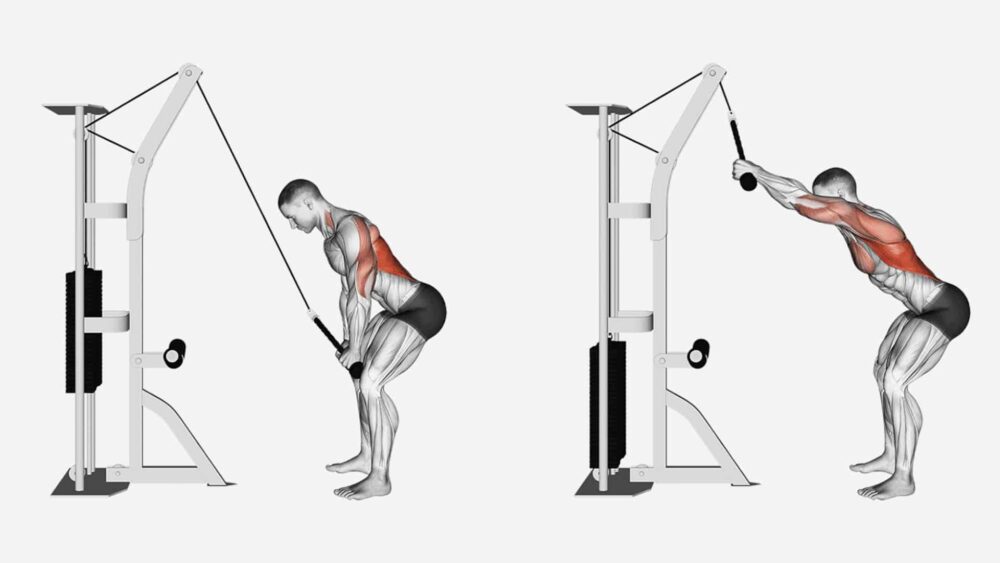
Pulley pullover
With the pulley pullover, whether you’re standing or lying down, you’re putting a particular strain on your back. From a standing position, place your feet shoulder-width apart, tilt your torso slightly forward and keep your back straight. Grasp the pulley with your outstretched arms and bring it up to your thighs. This variation allows you to work your back muscles effectively.

Pullover at the helm
The bar pullover lets you choose different holds for specifically target your pectorals or back. A tight grip puts more strain on your back muscles, while a wider grip emphasizes the outer part of your pectoral muscles. Note that with a spread grip, you put more pressure on your shoulders. Choose your load carefully and warm up your shoulders before starting the exercise.
Pullover on inclined bench
With the inclined bench pullover, you can mainly target your pectoral muscles. By keeping the dumbbells in contact with each other, you’ll feel a significant workout on the sternal part of your pectorals. This variant allows you to specifically strengthen and develop your pectoral muscles, with a greater range of movement and a focus on the central part of your pecs.
Discover a selection of GladiatorFit products suitable for these exercises
GladiatorFit offers you a whole range of products to help you perform these exercises. Below is a list of articles we recommend to help you carry out your session as efficiently as possible.


