


- Sports tips
6 exercises to tone your abs and get a flat stomach
The abdominal muscles include the rectus abdominis, oblique, obliquus brevis and transversus abdominis. These muscles play an important role in the balance of the pelvis, posture and spine. They are used in all your daily movements and allow you to rotate and tilt.
Why should you work on your abdominal muscles?
Working the abdominal muscles has numerous benefits for health and well-being. This exercise ensures :
Strengthening the abdominal muscles for better posture
Working the abdominal muscles helps strengthen the central region of the body, including deep muscles such as the transversus abdominis. These muscles play a crucial role in maintaining correct posture. By developing strong abdominal muscles, you can improve your overall posture, reduce back problems and prevent muscular imbalances.
Improved core stability and body balance
The abdominal girdle is an essential part of the muscular belt that surrounds the trunk. By strengthening these muscles, you improve core stability, which is beneficial for all physical activities. A strong abdominal girdle helps maintain good body balance. This reduces the risk of falls and injuries.
Reduced back pain
Strengthening the abdominal muscles is often recommended to prevent and relieve lower back pain. Abdominal muscles support the spine and help maintain good posture. This relieves pressure on the lumbar region. By strengthening these muscles, the risk of chronic low-back pain and back injuries is reduced.
Contributing to better breathing
The abdominal muscles also play a role in breathing. Regular training of the abdominal muscles can help develop deeper, more efficient breathing. Strengthening the respiratory muscles, such as the diaphragm, improves lung capacity and oxygenation of the body. Fuller, controlled breathing also promotes relaxation and can reduce stress.
When should you work on your abs?
Integrate abdominal exercises into your workout routine
To effectively incorporate abdominal exercises into your workout routine, here are a few tips:
- Plan sessions dedicated to abdominal exercises: find a slot in your schedule to focus on abdominal exercises. This could be once or twice a week, depending on your goals and fitness level.
- Choose a variety of exercises: There are many abdominal exercises that target different abdominal muscles. Include a variety of exercises in your routine to challenge the entire abdominal region. Crunches, planks, leg lifts, oblique twists and body-sculpting exercises are just a few examples of effective exercises.
- Incorporate abdominal exercises at the end of your workout: you can perform abdominal exercises at the end of your workout, after you’ve worked your main muscle groups. This helps prevent premature fatigue of the abdominal muscles and maintains good technique.
- Follow proper technique: When performing abdominal exercises, make sure you adopt good posture and proper technique. Engage your abdominal muscles by contracting them and bringing them closer to your spine. Avoid pulling on your neck or arching excessively.
- Progress gradually: Start with exercises suited to your fitness level, then build up as you go along. Increase intensity by adding reps, extending exercise duration or using more advanced variations.
- Combine your abdominal exercises with other activities: In addition to specific abdominal exercises, you should also include overall activities that challenge your abdominal muscles. You can swim, run or do stability exercises on a swiss ball. This will allow you to strengthen your abdominal muscles in functional movements.
- Stay consistent: The key to lasting results is consistency. Plan regular workouts dedicated to abs and follow your program over the long term. Be patient, because strengthening your abdominal muscles can take time.
Consider recovery and avoid excessive exercise
It is essential to consider recovery and avoid excessive exercise for several reasons:
- Injury prevention: When you train excessively without allowing sufficient time for recovery, you increase the risk of injury. Your body needs time to repair, regenerate and strengthen itself after physical effort. Insufficient recovery can lead to excessive fatigue, repetitive strain injuries and reduced athletic performance. This can lead to injury.
- Optimizing results: Proper recovery is essential to optimize the results of your training. Muscle gains, improved strength and endurance occur when you give your body time to recover and adapt to exercise stimuli. Too many sit-ups can lead to a state of overtraining, where your progress stagnates or regresses. Proper recovery planning optimizes physiological adaptations and improves long-term performance.
- Preserving mental health: The physical and mental exhaustion resulting from overtraining can have a negative impact on your mental health. This can lead to stress, anxiety and fatigue, as well as reduced motivation and enjoyment of exercise. Proper recovery helps maintain a balance between training and rest, promoting positive mental health.
- Performance enhancement: Adequate rest is necessary to allow your body to recover, rebuild and replenish its energy reserves. Accumulated fatigue from overtraining can lead to reduced strength, endurance, coordination and concentration. By paying attention to recovery, you can ensure optimum performance during your training sessions and competitions.
How to get visible abs?
To achieve visible abs, it’s important to understand that it’s a process that involves both specific abdominal training and a balanced diet. So, to get visible abs, you’ll need to consider these points:
The importance of combining abdominal training with a balanced diet:
For abdominal muscles to become visible, it’s essential to strengthen and tone these muscles with regular abdominal training. However, it’s just as important to focus on diet. A balanced, nutritious diet helps maintain a low percentage of body fat. This allows the abdominal muscles to come into their own.
Reducing body fat to make abdominal muscles more visible:
To make abs visible, it is necessary to reduce the body fat around the abdominal area. Even if the abdominal muscles are well developed, they will be masked by this layer of fat. To achieve a sufficiently low body fat percentage, follow a balanced diet rich in vegetables, lean proteins and complex carbohydrates. Limit consumption of processed foods rich in empty calories.
Discover this article on protein recipes for a balanced diet.
Incorporate cardiovascular exercise to burn extra calories:
Cardiovascular exercise, such as running, swimming, cycling or jumping rope, is effective in burning extra calories and helping to reduce body fat. Incorporating regular cardiovascular exercise sessions into your training program can help create a calorie deficit. This can help you lose fat and reveal your abdominal muscles.
The 6 best exercises for building abs
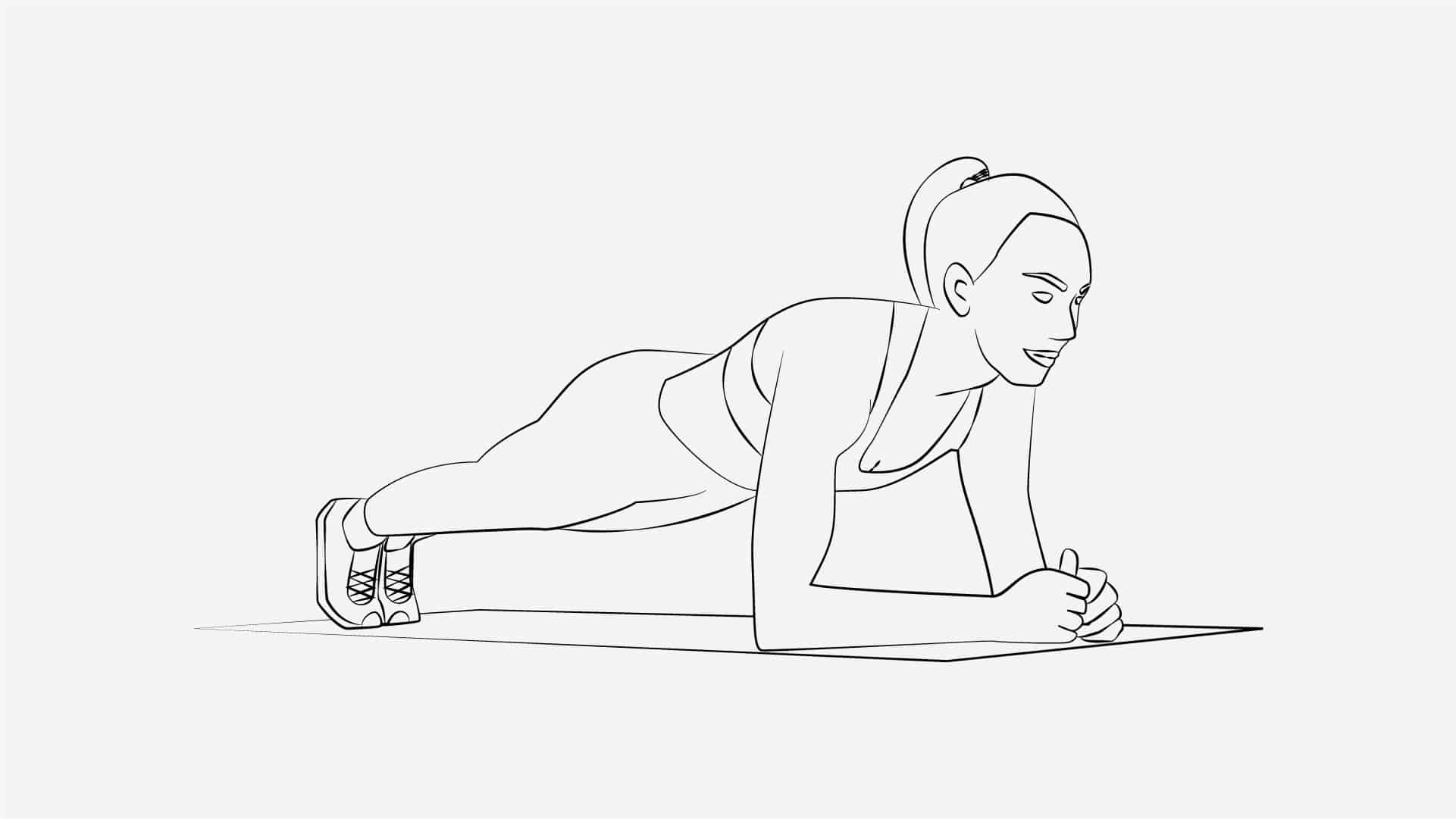
1. The board
Realization of the exercise
One of the greatest classics for a flat stomach: the plank.
- Make sure you pull in your stomach and contract your perineum.
- Hold for 60 seconds or until you are exhausted.
Muscles used
The plank involves several muscles, including the rectus abdominis, obliques, transverse abdominis, lower back, core and stabilizing muscles.
Board
Once you’re comfortable with the basic board, you can progress by varying the exercise.
2. Leg lifts
Realization of the exercise
- All you have to do is lie on the ground and then raise your legs at a 90-degree angle.
- Then lower your legs in a controlled manner, without letting them touch the ground completely.
Muscles used
This ab exercise is perfect for those who suffer from back pain.
Board
Make sure you keep your back flat on the ground and avoid any arching.
3. The roulette wheel
Realization of the exercise
- Sit on your knees and grasp the abdominal wheel with your hands.
- Slide it forward as far as possible and then back to the starting position.
Muscles used
This exercise not only exercises your abdominal muscles, but also all your back muscles.
Board
For best results, make the abdominal roller a regular part of your workout routine. Incorporate it two or three times a week, alternating with other abdominal exercises for a complete workout.
4. The crunch
Realization of the exercise
To avoid lower back pain:
- Keep your lower back in contact with the floor; you don’t want it to “dig in” during the exercise.
- Also, try to keep your belly tucked in throughout the movement to contract the transverse abdominal muscle.
- Finally, don’t forget to breathe throughout the exercise.
Muscles used
This exercise primarily targets the muscles of the abdominal girdle, with an emphasis on the rectus abdominis muscles.
Board
Crunches are one of the best known exercises for the abdominal muscles. They are highly effective, but need to be performed correctly.
5. The slants
Realization of the exercise
In this exercise, the right elbow touches the left knee and vice versa.
Muscles used
Working the oblique muscles will give you sideways abdominals.
Board
Be careful not to pull too much behind the neck to avoid neck pain.
6. The lateral sheathing
Realization of the exercise
- You can perform this exercise with either your elbow or your hand on the floor.
- Stay well sheathed and control your breathing.
- Hold on as long as you can.
Muscles used
This exercise works the more lateral muscle fibers of the oblique muscles.
Board
For the more advanced, it is possible to perform leg lifts to intensify the exercise.
Discover the GladiatorFit products adapted to these exercises
In order to build up your abs, GladiatorFit offers you a whole range of adapted products. Below is a list of articles we recommend to help you carry out your session as efficiently as possible.


