


Kinesiology Tape for the Shoulder: A Guide for Athletes
If you train intensely, you know just how much strain is placed on your upper-body joints. To keep performing at your best while protecting your body, applying a kinesiology tape to your shoulder has become a go-to solution for seasoned athletes. Whether you’re looking to stabilize a complex movement or relieve mild discomfort after a grueling workout, this therapeutic and preventive tool is a must-have in your gym bag.
The shoulder is the most mobile joint in the human body, but this incredible range of motion comes with an increased vulnerability to sports injuries. Whether you’re weight training, doing gymnastics, or tackling a WOD (Workout of the Day), your shoulders are subjected to massive loads and stress. That’s exactly where taping comes in. Unlike rigid support that restricts movement, elastic tape works with muscle action, provides immediate proprioceptive feedback, and promotes recovery.
In this comprehensive guide, we’ll explore together how this technique can revolutionize your practice. From theory to practice, discover our tips for choosing the best equipment on GladiatorFit.ch and learn how to strike a pose like a pro.
Why use kinesiology tape for the shoulder?
The use of an adhesive elastic band is not magic, but rather based on a simple and highly effective biomechanical principle. In sports settings, it is used both for prevention and during the return-to-sport phase to support the resumption of physical activity.
The Benefits of Cross-Training Sessions
Cross-training is a demanding discipline that combines weightlifting, gymnastics, and cardio. Movements such as snatches, pull-ups, and push presses put the shoulder joint complex under intense strain. During these exercises, stability is essential to prevent sports injuries and maximize force transfer.
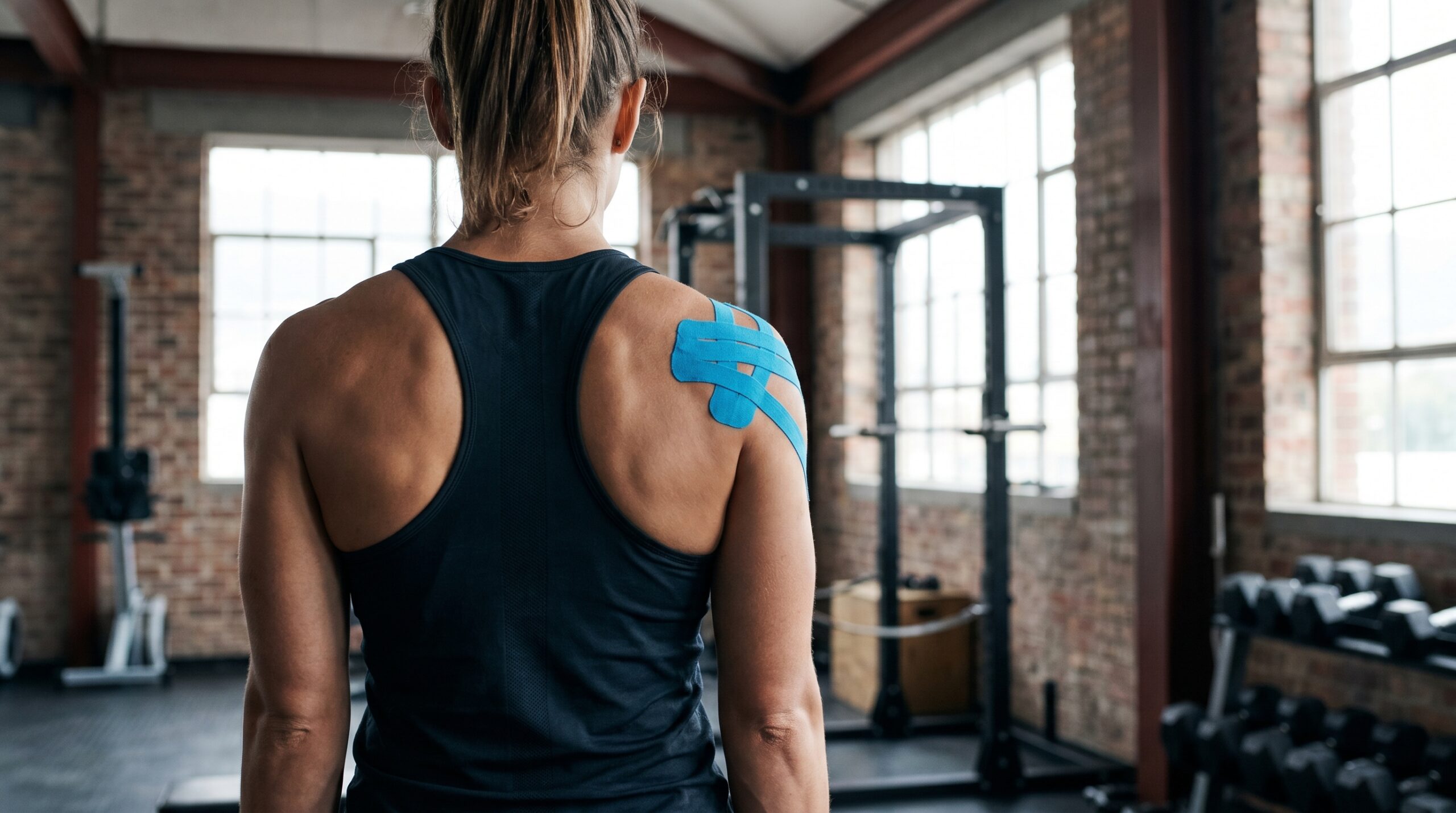
Applying a k-tape to this strategic area offers several mechanical and proprioceptive benefits:
- Stimulation of the skin’s mechanoreceptors, which sends a signal to the brain to improve body awareness (proprioception).
- Constant postural support: The gentle tension of the band helps the athlete keep their shoulders back and down, thereby preventing harmful rounding of the shoulders during pulls or pushes.
- Dynamic support that doesn’t restrict range of motion, allowing you to maintain perfect form even when fatigued.
In traditional weight training, this type of taping is also extremely effective for providing support during heavy sets of bench presses or lateral raises, where the deltoid is isolated and pushed to its limits.
Natural Relief for Joint Pain
Beyond performance, kinesiology tape is recognized worldwide for its effects on pain and inflammation. One of its main effects lies in its ability to microscopically lift the epidermis. By creating this slight space between the skin and the underlying tissues, pressure on pain receptors (nociceptors) is reduced.
This area also promotes better blood and lymphatic circulation. It speeds up the elimination of toxins that build up during exercise, which greatly optimizes post-workout muscle recovery. If you feel stiff after an intense workout, the band will act like a continuous massage throughout the day.
However, it’s important to qualify this: although medical SERP sometimes suggests miraculous results, kinesiology tape should be viewed in sports as an excellent complementary tool for support and prevention. It is by no means a substitute for a medical diagnosis or targeted muscle strengthening of the rotator cuff in cases of confirmed pathology. Its role is to support you, stabilize the joint, and speed up your return to normal activity.
How do I choose the right kinesiology tape on GladiatorFit.ch?
It’s not enough to just buy the first roll you come across. For shoulder taping to be effective under real-world conditions (sweat, friction, extreme stretching), the quality of the material is non-negotiable. At GladiatorFit.ch, we’ve selected products that meet the demands of even the most extreme athletes.
Grip and resistance to sweat
The worst enemy of your taping is moisture. Whether it’s heavy sweating during a metabolic circuit workout or water from the shower, a low-quality tape will quickly peel away at the edges and lose all its mechanical effectiveness.
For high-intensity sports, it’s essential to choose models featuring a high-quality, hypoallergenic acrylic adhesive. This adhesive is activated by body heat (by rubbing it in during application) and provides optimal adhesion for several days. The tapes available on GladiatorFit.ch are made of breathable cotton blended with spandex, ensuring both elasticity similar to that of human skin (approximately 130 to 140%) and waterproof or “water-resistant” properties that are essential for athletes.
Rolls of Tape vs. Pre-Cut Strips
As you browse our catalog to find the right equipment, you’ll come across two main options: continuous rolls and pre-cut strips.
- The Classic Roller: This is the choice of purists and professionals. It allows you to cut exactly the length you need based on your body type (a 100-kg weightlifter won’t have the same shoulder width as a 60-kg gymnast). It’s the most economical and versatile option.
- Pre-cut strips: These are ideal if you’re just starting out or if you want to save time in the locker room. The strips are ready to use and often have rounded edges to make application easier.
Feel free to browse our selection to find the color or size that suits your style and training needs!
Tutorial: How to Apply a Kinesiology Tape to Your Shoulder Yourself
Applying kinesiology tape to your shoulder yourself may seem complicated, but with the right technique and a mirror, it’s entirely doable. Here’s a step-by-step tutorial focused on overall stabilization of the deltoid muscle—perfect for strength training or functional workouts.
Preparing the skin and cutting the ribbon
Even before you touch the roller, preparing your skin is the key to ensuring the adhesive holds for several days:
- Thoroughly clean the shoulder and arm area with soap and water, or wipe it with a cotton pad soaked in alcohol to remove all traces of oil, sweat, or moisturizer.
- If the area is very hairy, it is strongly recommended that you trim or shave the hair. This prevents pain when removing the patch and maximizes the adhesive’s contact area.
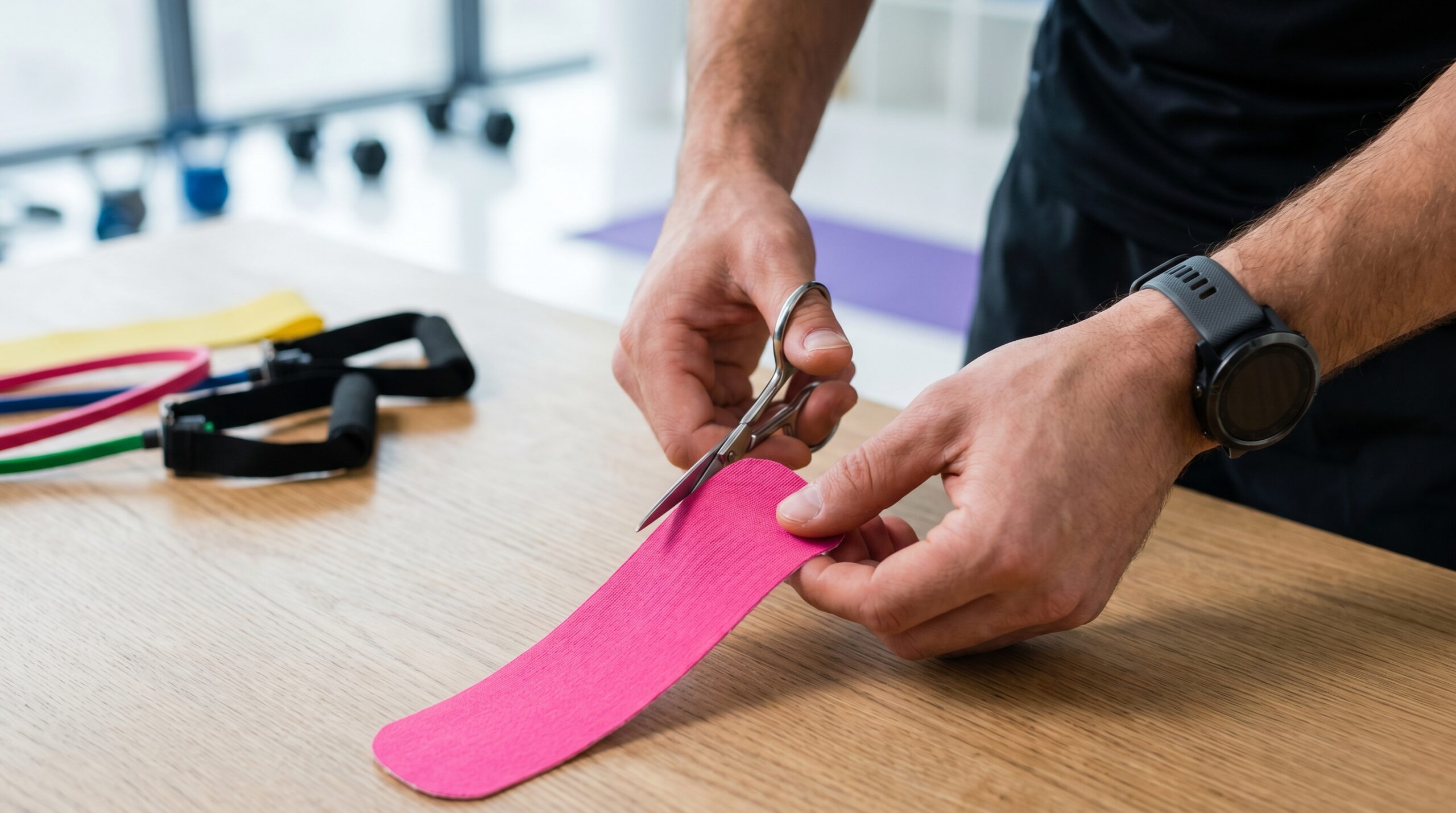
- Measure the required length: Start at the midpoint of your arm (just below the deltoid) and measure to the top of your shoulder (the acromion). Cut two strips of this length.
- Use sharp scissors to round the four corners of each strip. A square edge tends to snag on clothing and peel off prematurely.
Steps for placement on the deltoid muscle
The purpose of this setup is to wrap around the anterior (front) and posterior (back) deltoid muscles to form a stabilizing “clamp” around the shoulder joints.
- The base anchor: Take the first strip, peel off the protective paper about 3 centimeters from one end. Apply this base (without any tension) to the outer side of your arm, just below where the deltoid muscle attaches. Rub it to activate the adhesive.
- Application to the anterior deltoid: Extend your arm slightly backward to stretch the front shoulder muscle. Unroll the protective paper while keeping the base adhered. Apply moderate tension to the tape (between 25% and 50% of its maximum elasticity) and run it up along the front portion of the muscle toward the collarbone. Apply the last 3 centimeters without any tension. Rub vigorously.
- Placement on the posterior deltoid: Take your second strap and create an identical anchor, positioned right above or slightly overlapping the first anchor on your arm. This time, bring your arm in front of you, with your hand toward the opposite shoulder (to stretch the back of the shoulder). Stretch the band to 25–50% of its length and wrap it around the posterior deltoid, bringing it up to the top of the shoulder. Once again, secure the ends without tension.
- Final rub: Actively rub your hands over the entire application for a few seconds. The heat generated will permanently bond the acrylic to your skin.
Shoulder Taping: Mistakes to Avoid
Kinesiology tape is a powerful tool, but applying it incorrectly can undo all your hard work—or even cause new skin problems.
Stretch the band as far as it will go
This is the most common mistake among beginners. The idea that “the tighter it is, the better it holds” is incorrect when it comes to kinesiology taping. If the tape is too tight (more than 70–80% tension), especially at the anchor points (the ends), the tape will pull aggressively on the skin. During your strength training or cross-training exercises, this shearing force will cause severe irritation, redness, or even small blisters. Remember: the starting and ending anchor points must always be applied with 0% stretch.
Leaving the tape on for too long after exercising
Although the wraps available on GladiatorFit.ch are extremely durable, it is not recommended to keep them on indefinitely. In general, it is recommended to keep the tape on for 3 to 5 days at most. After that, the adhesive loses its effectiveness, the edges start to fray, and your skin needs to breathe freely.
When removing the strip, be gentle with your joints and skin. Don’t rip it off in one quick motion like a traditional band-aid. It’s best to remove the strip in a warm shower: the water and heat will soften the adhesive. You can also soak the strip in baby oil or massage oil, let it sit for a few minutes, then gently roll the strip up in the direction of hair growth while holding the skin taut with your other hand.
Frequently Asked Questions About Shoulder Taping
How do you apply kinesiology tape to the shoulder?
To apply kinesiology tape to the shoulder effectively, start by cleaning the skin to ensure good adhesion. Cut two strips, rounding the corners. Apply the first end without tension under the deltoid muscle (on the upper arm). Stretch the arm backward and apply the first strip along the front of the shoulder with 25 to 50% tension. Next, cross your arm forward and apply the second strip along the back of the shoulder with the same tension. Always finish applying the strips without stretching the ends, and rub vigorously to activate the hypoallergenic adhesive.
Is kinesiology tape effective for shoulder pain?
Yes, kinesiology tape is recognized as an effective treatment for relieving shoulder pain, particularly during muscle recovery or after a minor sports injury. It works by creating a microscopic lift in the skin, which relieves pressure on the underlying tissues, promotes blood and lymphatic circulation, and reduces pressure on pain receptors. Although it cannot heal a tear or a serious condition on its own, it provides natural mechanical relief that is highly valued during strength training or cross-training sessions.
What are people's opinions on kinesiology tape treatment for the shoulder?
Feedback from athletes and sports professionals on kinesiology taping for the shoulder is generally very positive, especially when it comes to prevention and movement support. Athletes appreciate the improved proprioception (greater awareness of joint position) and the muscular support that does not restrict range of motion, unlike traditional rigid shoulder taping. According to many user reviews, the key to success lies in the quality of the K-Tape (its resistance to sweat) and the precision with which tension is applied during application.
To wrap up this guide on application and use, here are direct answers to the most common questions athletes have about this type of treatment.
Discover our selection of sports equipment
Find all the equipment you need to reach your goals on GladiatorFit.ch

Other articles




Newsletter
Receive our fitness tips and exclusive offers


