


Foot Massage Ball: Guide and Benefits
As an athlete, you spend hours optimizing your workouts, perfecting your squat technique, and paying close attention to your nutrition. Yet there’s one part of your body you’re almost certainly neglecting: your feet. As the foundation of your posture and your direct point of contact with the ground, your feet absorb all the impact during your cross-training, weightlifting, or running sessions. That’s where the foot massage ball comes in—a compact yet powerful tool to maximize your performance. Contrary to popular belief, this accessory isn’t just for general well-being; it’s an absolute game-changer for optimizing your athletic recovery, preventing injuries, and boosting your ground contact.
In this comprehensive guide from GladiatorFit, we’ll break down exactly how and why you absolutely must incorporate this small piece of equipment into your workout routine. Get ready to transform the way you recover after a workout.
The Many Benefits of a Foot Massage Ball
Using a targeted accessory under the sole of your foot goes far beyond simply feeling relaxed. It’s a genuine biomechanical intervention aimed at restoring the functionality of your connective tissues. When you’re doing a series of jumps, sprints, or heavy lifts, the arch of your foot accumulates immense mechanical stress that must be relieved.
Relief for the Arch of the Foot and Injury Prevention
The secret to optimal mobility lies in myofascial release. Under your foot is the plantar fascia, a very thick band of fibrous tissue that connects your heel to your toes. When this area is overused—for example, after a series of jump ropes or sprints—it tightens up. If you do nothing about it, you put yourself at risk for injuries that can be debilitating for an athlete, such as plantar fasciitis or the well-known heel spur.
By applying precise pressure with a firm ball, you’ll relax these fasciae and break up tissue adhesions. But the impact doesn’t stop at the foot. The human body functions according to the principle of muscle chains. Your plantar fascia is directly connected to your calves, hamstrings, and even your glutes. By releasing tension under your arch, you instantly improve the flexibility of your entire posterior chain. This has a direct impact on your performance: better ground contact. A flexible and responsive foot will allow you to be much more stable during your squats or deadlifts, thereby maximizing your force transfer.
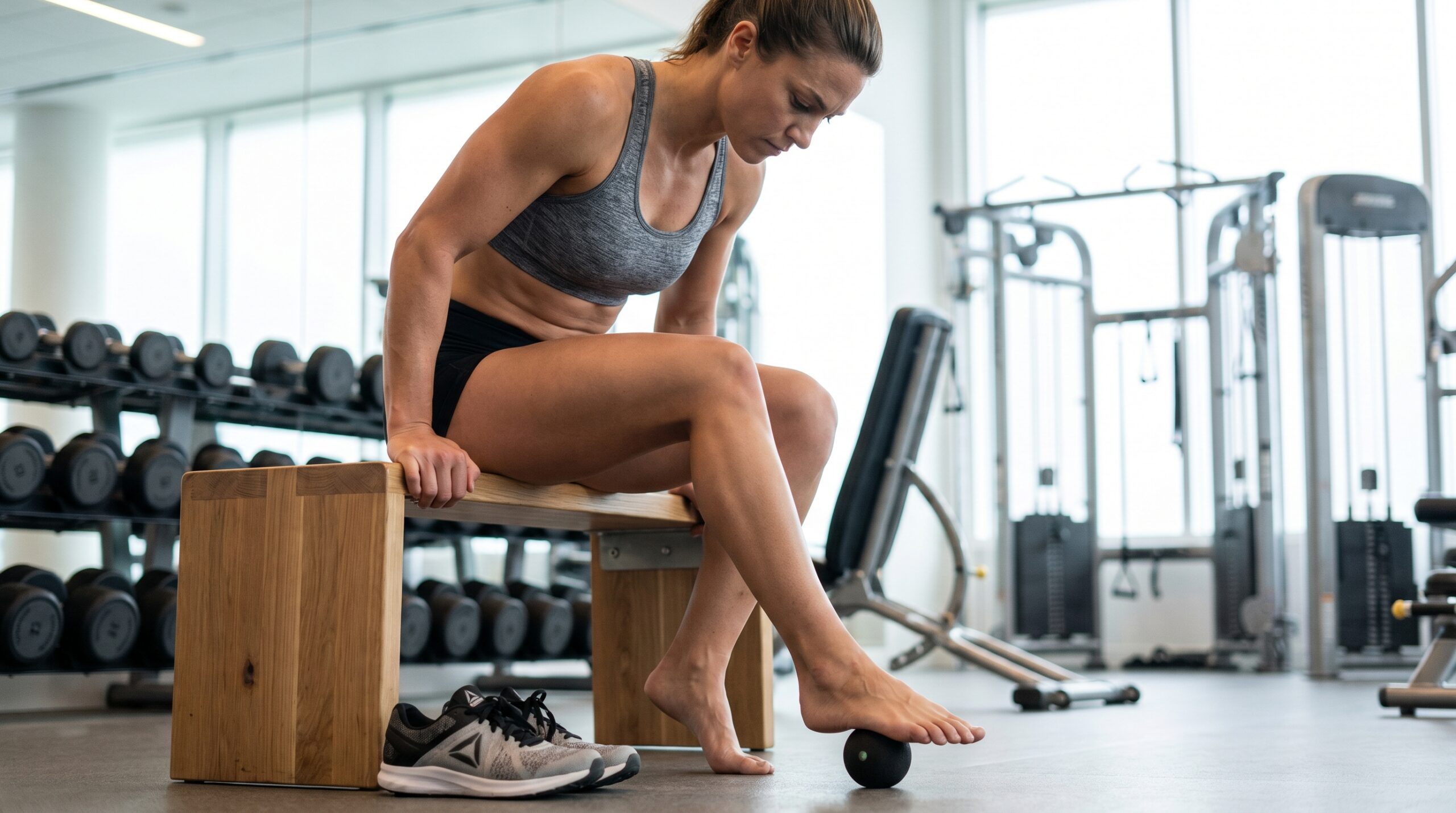
Optimizing Recovery After Cross-Training
Cross-training is a high-intensity sport that leaves no room for gaps in recovery. After an intense WOD (Workout of the Day) that includes box jumps, burpees, or weightlifting, the intrinsic muscles in your feet are exhausted. This localized fatigue can lead to cramps or chronic stiffness.
Massaging this area immediately boosts blood circulation. This increased blood flow delivers fresh oxygen and essential nutrients to tissues damaged by exercise, while accelerating the removal of metabolic waste products (such as lactic acid). Unlike traditional foam rollers, which are too bulky to conform to the curve of the foot, the ball’s small size allows it to reach deep tissues with surgical precision, thereby promoting high-quality athletic recovery.
How to Use Your Self-Massage Tool Properly?
Having the right equipment from GladiatorFit.ch is the first step, but you still need to know how to use it effectively to get the most out of it without hurting yourself. Self-massage follows specific biomechanical principles that must be followed to deactivate “trigger points” without damaging the nervous system.
Rolling techniques and targeted pressure points
For an effective foot massage, technique is key. Here is a simple, tried-and-true protocol used by physical trainers:
- Stand barefoot near a wall or a squat rack to help you keep your balance.
- Place the ball under the base of your toes and start rolling it very slowly toward your heel.
- Maintain constant but manageable pressure. Use your body weight to adjust the intensity: lean forward to apply more pressure, or lean back to lighten the load.
- When you come across a knot or a particularly sensitive area, stop rolling. Apply steady pressure to that specific spot for 20 to 30 seconds while breathing deeply, until the pain subsides.
- Next, use gentle circular motions on the heel, then on the outer and inner edges of the foot.
It’s crucial not to move too quickly. Rapid movement tends to tense the muscle as a protective reflex, rendering myofascial release completely ineffective. Slowing down is your best ally.
Duration and Frequency: When Is the Best Time of Day to Give a Massage?
Consistency trumps intensity. For regular exercisers, it’s recommended to incorporate this practice into your daily routine. One to two minutes per foot is more than enough to achieve tangible results in terms of mobility and reduced muscle tension. There’s no need to focus on the same area for 15 minutes, as this could cause inflammation.
You can do this massage in the morning when you wake up to stimulate your nervous system and prepare your feet for the day, or in the evening while watching TV to relax your fascia after a long day of training or work.
Which massage ball should I choose on GladiatorFit?
At our GladiatorFit.ch online store, we offer a carefully curated selection of equipment designed for mobility, yoga, and recovery. The choice of your accessory will depend directly on your goals, your pain tolerance, and the specifics of your workouts.
The spiky ball to stimulate blood circulation
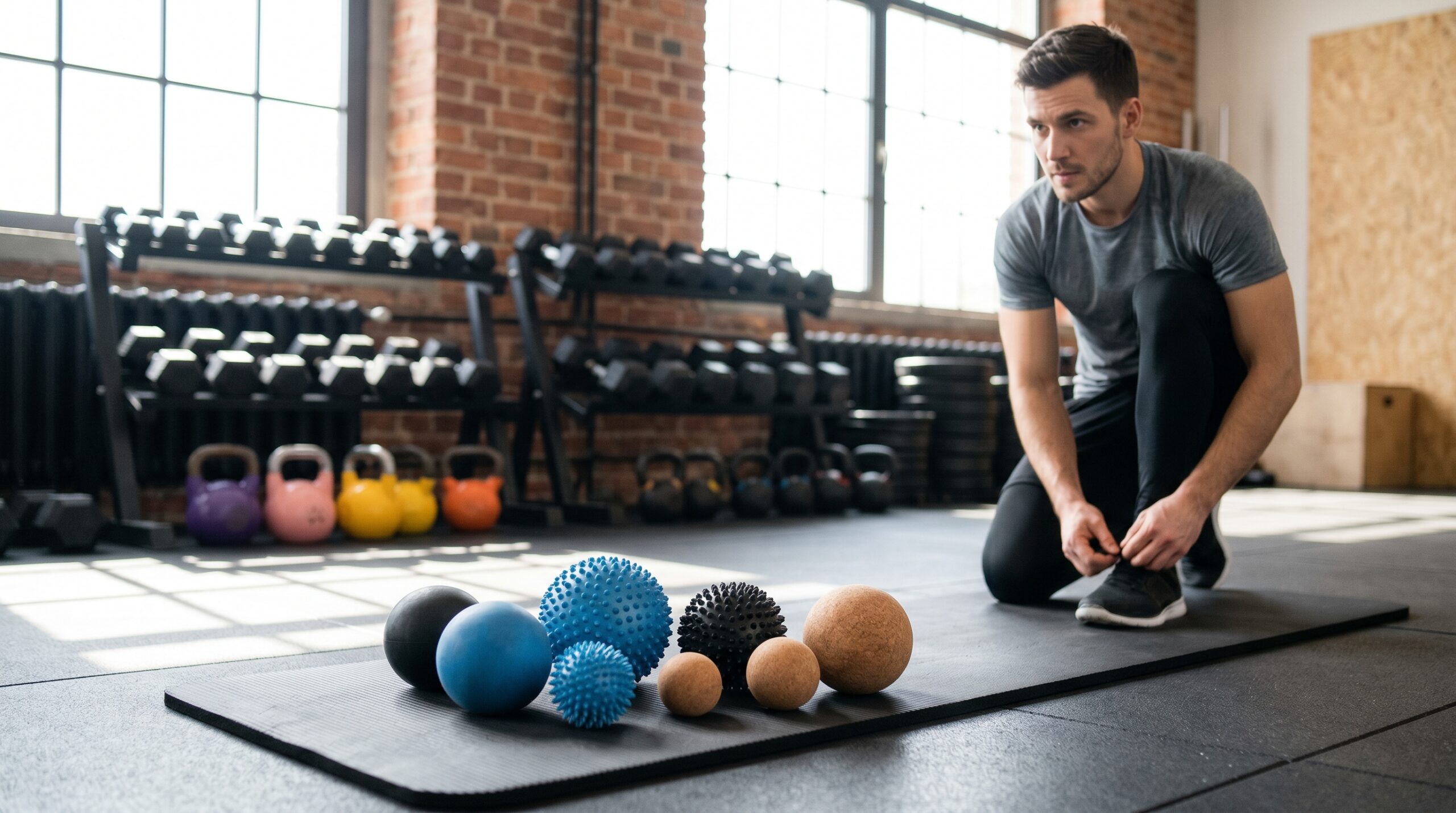
The spiked ball, often called a “hedgehog,” is a must-have for athletes seeking superficial nerve stimulation. Thanks to its rigid or semi-rigid spikes, it excels at sports foot reflexology. The spikes penetrate the skin slightly, causing immediate vasodilation.
This type of texture is especially recommended if you suffer from cold feet, heavy legs, or if you need to quickly stimulate your nervous system before a plyometric workout. The action of the spikes will “awaken” the thousands of nerve endings under your foot, sending a strong signal to your brain to improve your proprioception. It’s the perfect tool for an intense but injury-free warm-up.
The smooth ball, cork ball, or double ball for deep fascia
If your main goal is to release deep fascia and break up stubborn muscle knots, you’ll want to choose a smooth ball or a double ball (often called a peanut ball). These models offer a full contact surface, allowing you to apply much heavier and deeper pressure.
- The smooth rubber or silicone ball: Perfect for precisely targeting the fascia without slipping. It provides a deep massage similar to the pressure applied by a physical therapist’s elbow.
- The cork ball: Ideal for eco-conscious athletes looking for very high density. Cork does not deform under body weight, providing maximum pressure for heavier athletes (those involved in strength sports or bodybuilding).
- The double ball (peanut): Although it’s ideal for use along the spine, it can also be placed under the foot to massage both arches (inner and outer) at the same time.
Don’t let plantar fasciitis keep you away from the gym for months. Check out our GladiatorFit catalog, in the mobility and recovery category, and order your self-massage equipment today to take care of your feet!
Incorporating Foot Massage into Your Workout Routine
Buying the equipment is one thing; using it at the right time is another. Unlike an approach focused purely on clinical well-being, GladiatorFit’s vision is centered on optimizing your workout. The way you massage your feet will differ depending on whether you’re preparing for exercise or recovering from it.
Joint Warm-Up Before Weight Training
Before loading your bar for a heavy squat or starting a weightlifting session, your feet need to be ready to handle hundreds of kilos. Briefly massaging the arch of your foot before exercising serves as a “wake-up call” for the central nervous system (CNS). By rolling a ball under your feet for about 30 to 45 seconds in a dynamic, rapid manner, you increase proprioception and the sensitivity of your plantar receptors.
The result? Your brain better understands how your foot is positioned on the ground. Your toes will spread out naturally, your arch will tighten, and your footing will become extremely stable. This is the famous “tripod stance” that all weightlifters strive for to prevent their knees from caving in during the push phase.
Returning to a state of calm to flush out toxins
At the end of your workout, the focus shifts. The goal is no longer to stimulate the nervous system, but rather to activate the parasympathetic nervous system to kickstart recovery. After intense combat sports sessions (where moving on tiptoes puts a tremendous strain on the calves) or track and field workouts, a post-workout massage becomes essential.
Here, you’ll use very slow, deep movements. The goal is to speed up the drainage of accumulated toxins and rehydrate the fascia. The micro-tears caused by exercise create inflammation; by pressing on the tissues with the ball, you act like a sponge: you flush out blood loaded with waste products to make way for a rush of blood rich in restorative nutrients when you release the pressure.
Frequently Asked Questions (FAQ)
What are the benefits of using a massage ball under your foot?
The benefits include myofascial release, stimulation of blood circulation, and improved flexibility of the arch of the foot. This significantly helps prevent sports injuries such as plantar fasciitis or heel spurs, while promoting the elimination of toxins and reducing muscle tension that builds up after a strenuous workout.
Is it good to massage your feet every day?
Yes, massaging your feet every day is very beneficial, especially for regular athletes. A daily routine of 1 to 2 minutes per foot is enough to maintain tissue flexibility, promote stability on the ground, and optimize athletic recovery without risking irritation of the plantar fascia.
Are massage balls good for your feet?
Absolutely. Unlike foam rollers, the small size and density of these balls are perfectly suited to the anatomy of the foot. They allow you to apply precise pressure to muscle knots and effectively target the deep fascia, thereby improving the overall mobility of the posterior chain.
What is the best foot massager?
For athletes, the manual massage ball remains the best tool because it allows you to precisely control the intensity and location of the pressure using your body weight. On GladiatorFit, you’ll find smooth cork balls for deep pressure, or the spiked ball, which is excellent for stimulating circulation and foot reflexology before or after a workout.
Discover our selection of sports equipment
Find all the equipment you need to reach your goals on GladiatorFit.ch

Other articles

Newsletter
Receive our fitness tips and exclusive offers


