


Physical Therapy Massage Ball: Buying and Usage Guide
If you exercise regularly, you’ve probably already experienced those dull aches, persistent muscle knots, or that feeling of stiffness that limits your movement. Incorporating a physical therapy massage ball into your post-workout routine could very well be the ultimate solution to free your body from these constraints. Long reserved for physical therapy offices, this small accessory has become an indispensable tool for athletes who want to take care of their bodies at home.
Unlike other, bulkier devices, this ball offers incredible precision. It works just like a professional’s thumb, able to target tension wherever it’s hiding. In this comprehensive guide, we’ll explore—from an expert and paramedical perspective—how this magical tool works, how to choose the model that best suits your needs, and, most importantly, how to master the art of self-massage to restore a relaxed body that’s ready for your next sessions on GladiatorFit.
What are the benefits of a physical therapy massage ball?
The popularity of this accessory is no accident. Physical therapists strongly recommend using these balls for one very simple reason: they allow patients to extend the effects of their treatment at home by targeting the fascia and deep muscles.
Relief from trigger points and tension
The human body is a complex machine enveloped by a network of tissue called fascia. During intense physical activity or prolonged poor posture, adhesions form. These are known as “trigger points.” They are localized micro-spasms—small knots in the muscle fibers—that can refer pain to other areas of the body.
Whereas a traditional massage tool smooths out the overall surface, the massage ball—thanks to its small size—allows for extremely targeted pressure. It sinks into the tissue to reach those trigger points that a traditional foam massage roller simply can’t reach. By applying sustained pressure to these areas, you’ll force the muscle fibers to relax, providing immediate relief from deep muscle tension.
Improved blood circulation
The mechanical action of the ball on the skin and underlying tissues creates a very beneficial pumping effect. When you press the ball against a muscle, blood is momentarily forced out of the area. As soon as you release the pressure, a rush of fresh blood, rich in oxygen and nutrients, flows into the muscle tissue.
This stimulation of local blood flow is essential for the health of your muscles. It helps speed up the removal of metabolic toxins that build up during exercise (such as lactic acid) and rehydrates the fascia, making it more supple and slippery. Healthy fascia is the key to optimal mobility.
Optimizing Recovery After Cross-Training
Cross-training is a demanding sport that challenges the body in a comprehensive and asymmetrical way. Jumps, deadlifts, pull-ups, and sprints place enormous mechanical stress on the muscles and joints.
Incorporating a physical therapy massage ball into your muscle recovery routine helps reduce muscle tension after an intense workout. By using it regularly, you can prevent severe muscle tightness and postural imbalances. Your body recovers faster, your range of motion improves, and you significantly reduce the risk of injuries related to overtraining. This ensures you can get back to training the next day with refreshed muscles.
How do you choose a massage ball for recovery?
Not all balls are created equal. Given the wide variety of models available, it’s essential to understand the purpose of each texture and density so you can choose the at-home physical therapy tool that best suits your pain and your athletic activities.
Spiky ball for surface stimulation
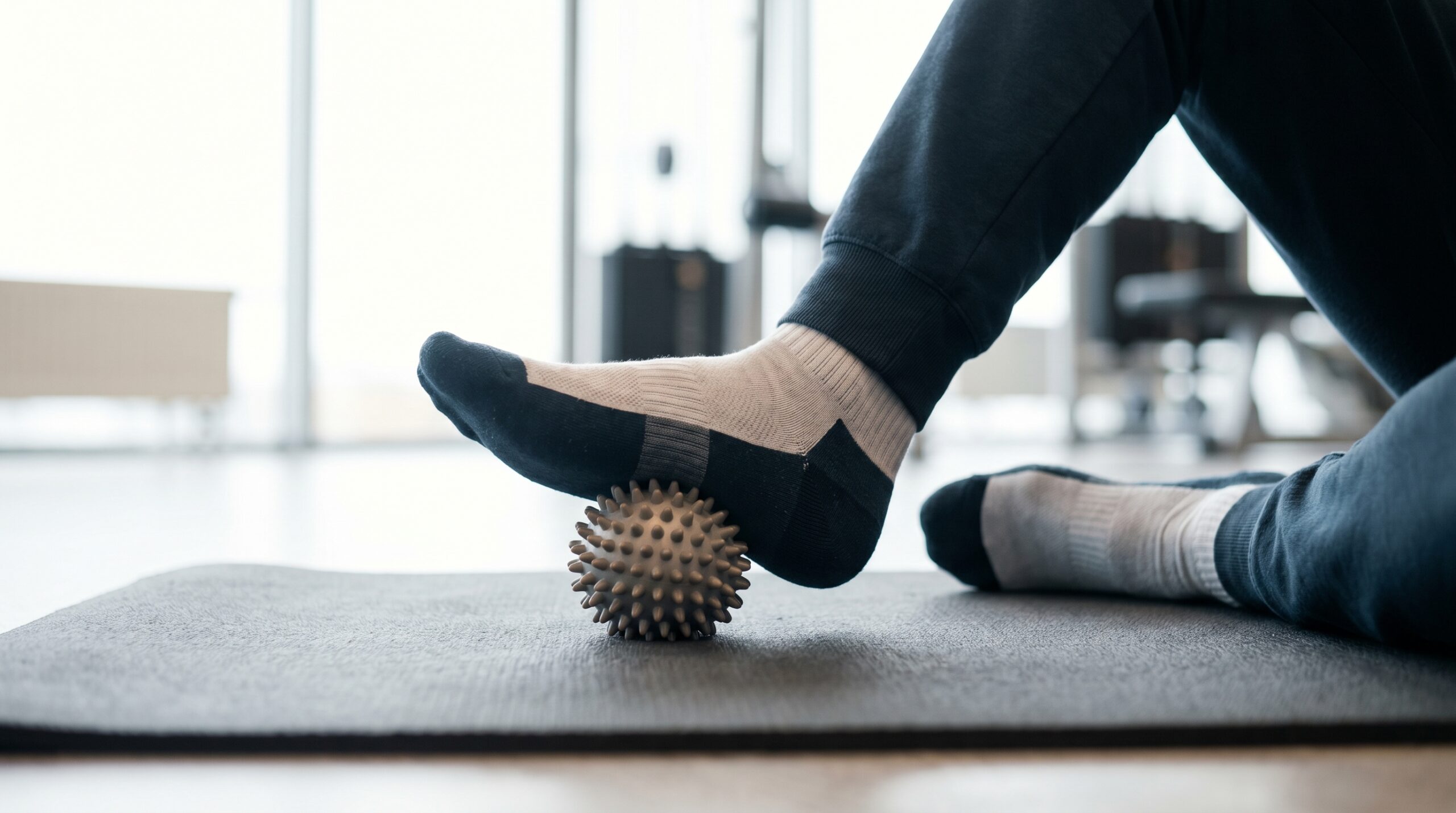
The spiky ball, often called a “hedgehog,” is an excellent tool for sensory stimulation and superficial relaxation. Its small spikes are not designed to penetrate deeply into the muscle, but rather to awaken nerve endings and significantly stimulate peripheral blood flow.
It’s the undisputed ally of the arch of the foot. If your feet are tired after a long run or a day of standing at work, rolling it under your foot provides a feeling of total relaxation, inspired by the principles of reflexology. It’s also ideal for relaxing your forearms or warming up your muscles before exercise with gentle friction.
Smooth lacrosse-style ball for deep tissue massage
It’s the favorite (but oh-so-life-saving!) torture device of seasoned athletes. The smooth ball, often made of dense rubber or silicone (similar to a lacrosse ball), is hard and doesn’t deform under the body’s weight. Its purpose? To penetrate the superficial layers to reach the deep tissues.
This firm density is essential for releasing trigger points located in thick muscle groups. It’s perfect for working the gluteus maximus, the piriformis, and dense calves, or for releasing tension around the shoulder blades and the rotator cuff in the shoulders. It’s a must-have for relieving any chronic sports-related pain.
A Double Shot for the Spine
The double ball, affectionately nicknamed “peanut,” is a brilliant invention. It consists of two balls joined at their center. This ergonomic design was specifically created to target a very sensitive area: the spine.
When performing a self-massage on your back, massaging directly on the bones (the spinous processes of the vertebrae) is not only painful but also dangerous. The hollow design of the double ball allows it to conform to the form of the spine, thereby protecting the bones while applying symmetrical, bilateral pressure to the erector spinae muscles. It’s the ultimate tool for loosening up a stiff lower back or relieving tension in the neck after a day spent in front of the computer.
How to Use a Massage Ball Properly?
Having the right equipment is one thing; knowing how to use it is another. In physical therapy, the effectiveness of a treatment depends on the precision of the technique. Here are some quick tutorials to help you safely master self-massage at home.
Golden rule of safety: Never massage directly on a joint or bone. Focus exclusively on the muscle tissue, and don’t forget to breathe deeply: exhaling helps the nervous system relax the muscle in response to pain. Maintain pressure for 1 to 2 minutes per area.
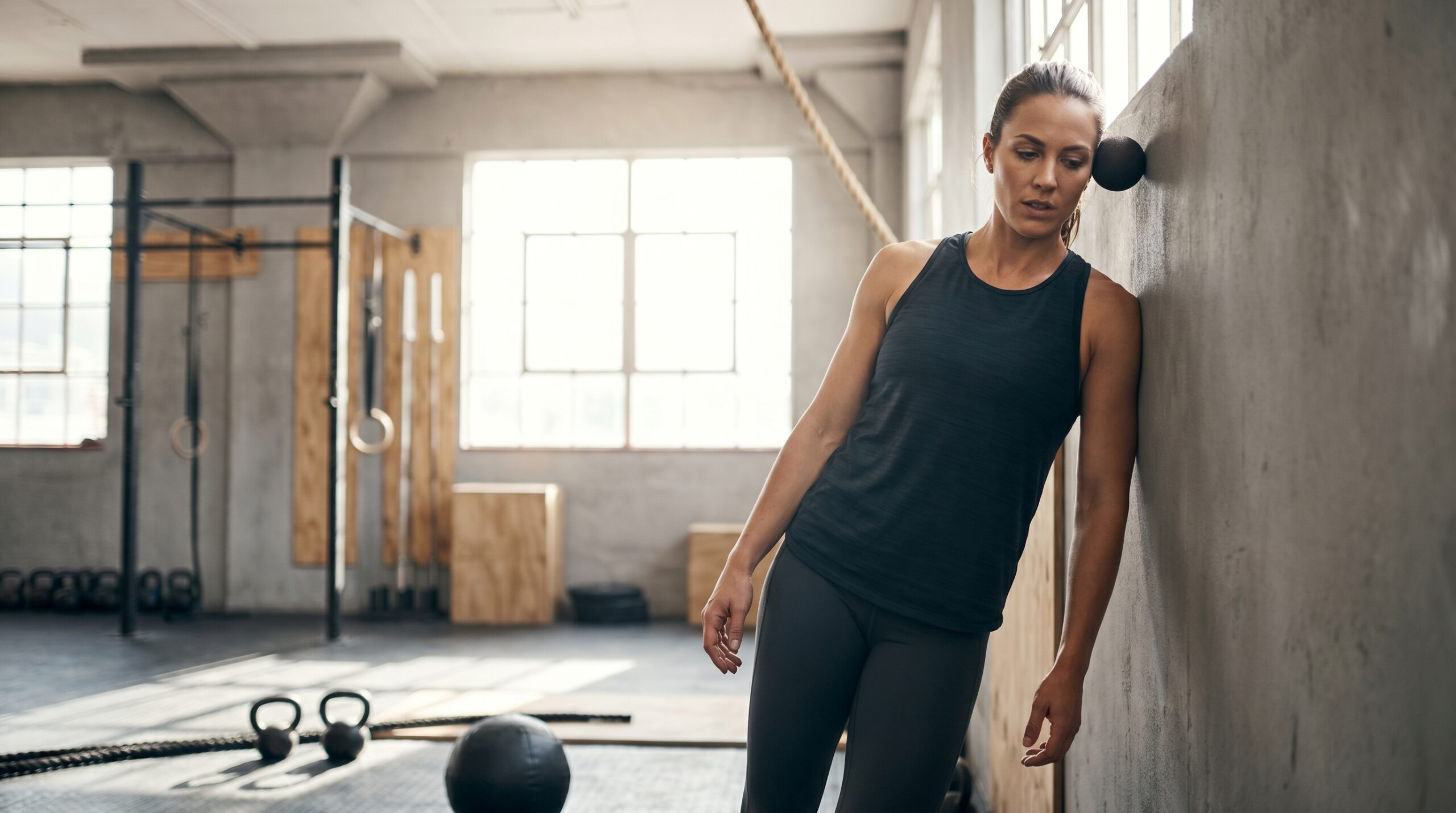
Self-Massage for the Back and Shoulders Against a Wall
The wall is your best friend if you’re just starting out or if you want to control the pressure you’re applying, because using the floor immediately puts your full body weight on it, which can be too intense at first.
- Stand with your back against a smooth wall.
- Place the physical therapy massage ball between the wall and the upper part of your back (between your shoulder blade and your spine, without touching your spine).
- Bend your knees slightly and make small movements up and down or from left to right to explore the area.
- As soon as you feel a particularly sensitive spot (a trigger point), stop the movement.
- Keep applying pressure to this specific point while breathing deeply until the pain is reduced by half (usually after 30 to 60 seconds).
Relieve pressure on the arch of the foot and the calves
The lower limbs are constantly subjected to impact. A good self-massage routine for this area helps prevent conditions such as plantar fasciitis and periostitis.
- For the arch of the foot: Sit on a chair or stand up. Place a spiky ball under your bare foot. Roll the ball from your heel to the base of your toes, applying downward pressure. Focus on the inner arch.
- For your calves: Sit on the floor with your legs stretched out in front of you. Place a smooth ball under the front of your calf.
- Lift your buttocks slightly off the floor by pushing down with your hands to increase the pressure on the ball.
- Roll your calf slowly over the ball. If you feel a tight spot, rotate your ankle while maintaining pressure to release the deep muscle.
Stretching the glutes on the floor
The glutes are the main powerhouses of the human body and are particularly engaged during cross-training. Stretching them improves hip mobility and often relieves lower back pain.
- Sit on the floor with your knees bent and your feet flat on the ground.
- Place a smooth ball under one of your buttocks, toward the outer side (the area of the gluteus medius and piriformis muscles).
- Shift your weight to that side and support yourself with your hands behind you.
- For an even deeper massage, cross the ankle of the side being massaged over the opposite knee (the “4” position). This stretches the gluteal muscles and allows the ball to penetrate deeper.
- Use slow circular motions to locate areas of tension, and apply steady pressure to the tender spots.
Our selection of self-massage accessories on GladiatorFit
At GladiatorFit, we know that quality recovery is the foundation of all athletic progress. That’s why we’ve selected a range of accessories for you that have been approved by sports and health professionals.
In our catalog, you’ll find high-density smooth balls for demanding athletes, colorful and invigorating spiked balls to stimulate your circulation, as well as the famous double balls to pamper your back.
For a truly comprehensive self-massage routine, we strongly recommend combining the use of the ball with a foam massage roller. The technique is simple: first, use the massage roller to warm up the fascia and flush out toxins over large areas (such as the quadriceps or the entire back), then use your physical therapy massage ball to work precisely on any remaining knots. This combination is the secret to perfect muscle recovery, ensuring you’re pain-free and ready for your next WOD or strength session.
Frequently asked questions
What are the benefits of a massage ball?
Using a massage ball offers numerous benefits, including the release of trigger points and the relief of deep muscle tension. It significantly improves blood circulation and tissue oxygenation, which speeds up muscle recovery and prevents muscle stiffness after exercise. It’s an excellent preventive tool derived from physical therapy to increase mobility and help relieve post-workout pain.
How do you use massage balls?
To use massage balls effectively, place the ball between the tense muscle and a hard surface (such as a wall or the floor). Gradually apply your body weight and make small, slow movements to locate the painful areas. Once you’ve found a knot, maintain steady pressure for 1 to 2 minutes while breathing deeply until the deep tissues relax. Always avoid massaging directly over a joint or bone.
What is the best massage ball?
The best ball depends on your specific needs. To relieve pressure on the arch of the foot or stimulate the sole, a spiked ball is ideal. To release trigger points in dense muscles like the glutes, a smooth, hard ball (such as a lacrosse ball) is most effective. Finally, to safely massage along the spine without touching the bones, the double ball (or peanut ball) is the best option for your self-massage routine.
Discover our selection of sports equipment
Find all the equipment you need to reach your goals on GladiatorFit.ch

Other articles

Newsletter
Receive our fitness tips and exclusive offers


