


Skipping rope: how to choose and progress
If you’re looking for a formidably effective piece of equipment to transform your physical condition, look no further. The skipping rope is without doubt one of the most complete and accessible fitness accessories in the world. Whether you’re a seasoned gym-goer, a martial arts practitioner or simply someone who wants to get fit from the comfort of their living room, this minimalist tool hides immense biomechanical and physiological benefits. At GladiatorFit.ch, we know that a good rope is more than just a piece of cable. From the design of the handles to the fluidity of the rotation, every detail counts to maximize your performance.
In this ultra-practical and technical buying guide, we’ll break down the features that make all the difference. Finis no more haphazard choices: you’ll discover how to select the perfect rope for your level, discipline and objectives, while mastering the basic techniques to jump like a pro.
Why incorporate skipping rope into your training?
Skipping isn’t just child’s play or a routine warm-up. It’s a high-intensity, multi-joint exercise that involves the whole body. Son’s integration into your fitness routine will take your results to the next level.
Benefits for cardio and weight loss
If your main objective is to burn calories fast, this is the tool for you. Skipping is one of the most intense cardio-training exercises available. By simultaneously using your lower body for the rebound and your upper body for the rotation, your heart rate accelerates in a matter of seconds. Studies show that 10 to 15 minutes of this exercise is equivalent to about 30 minutes of running at a moderate pace.
The intense effort generated also promotes the “afterburn” effect (EPOC), meaning that your metabolism will continue to consume energy long after your session is over. By combining this exercise with a balanced diet, fat loss becomes much faster and more targeted.
A major asset for crosstraining and combat sports
In the world of crosstraining and combat sports (such as boxing, muay Thai or MMA), this equipment is simply essential. Why? Because it develops three fundamental pillars of athletic performance: agility, coordination and muscular endurance.
For a boxer, jumping allows you to work on footwork, lightness of support and the ability to remain explosive for several rounds. For a crosstraining athlete, it’s a formidable means of improving overall metabolic conditioning. What’s more, it’s an extremely lightweight and compact piece of equipment. You can easily slip it into your gym bag, take it to the park, or even travel with it. It’s your guarantee of a professional workout anywhere, a real must-have available from GladiatorFit.ch.
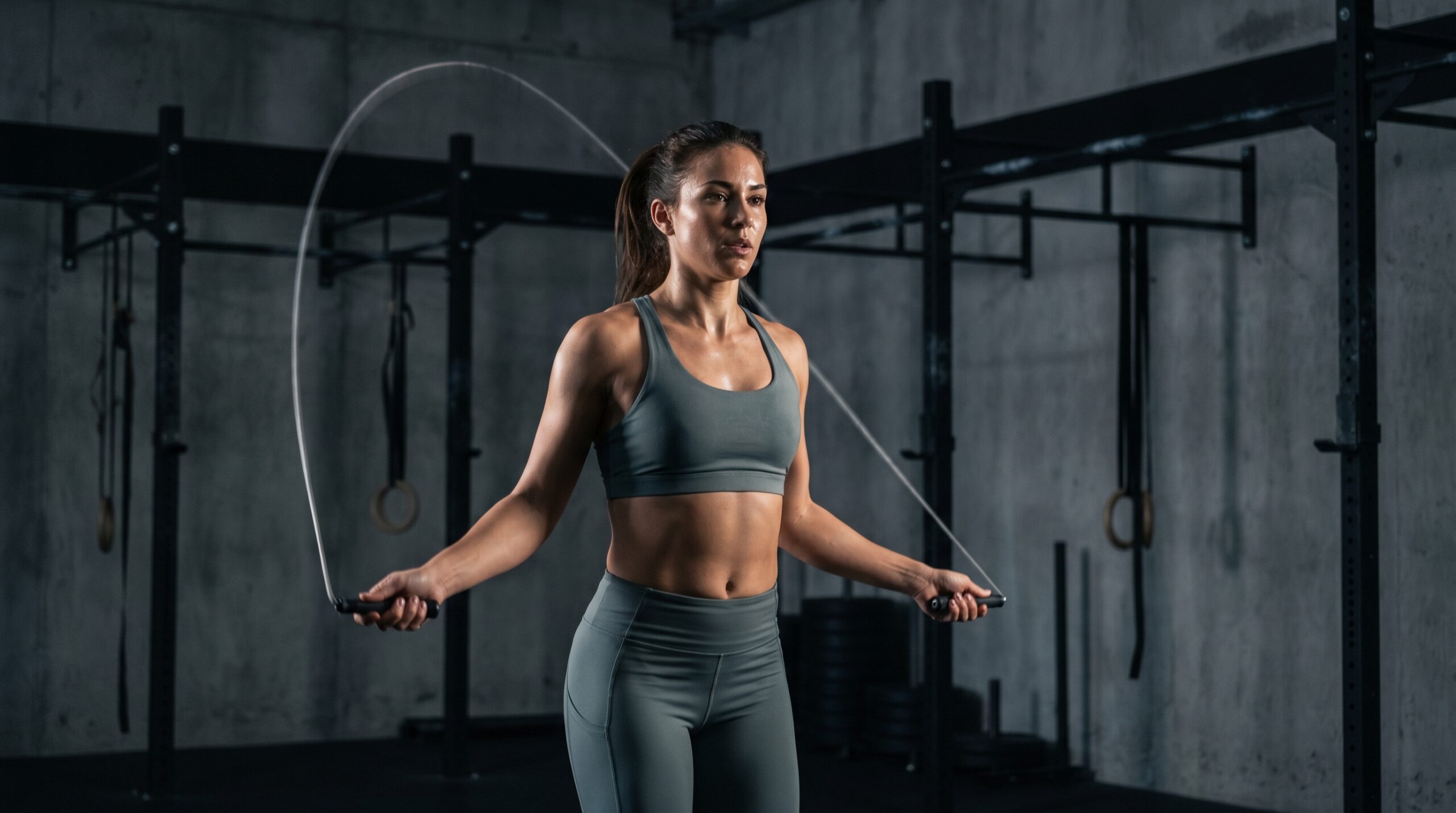
How to choose the right skipping rope?
Jumping with unsuitable equipment is the best way to get frustrated, get your feet tangled up and give up. The biomechanics of your movement depend directly on the technical specifications of your equipment. Here’s how to make the right choice.
Set the right length for your height
This is the golden rule par excellence: a rope that’s too long will rub the ground excessively and slow your pace, while one that’s too short will kick you in the shins. To find the ideal length, the method is simple:
- Stand upright and lock the middle of the cable under one of your feet.
- Pull the handles up along your body.
- For beginners, the base of the handles should reach just under your armpits (at chest level).
- For advanced riders, the handles can stop at the floating ribs to allow faster, shorter rotation.
That’s why it’s crucial to opt for adjustable models. The majority of our Swiss catalog offers screw clamp systems that allow you to adjust the cable to the nearest millimeter, then cut off the excess with a pair of wire cutters.
The importance of handles and ball bearings
If you want to make serious progress, forget the basic supermarket models. The secret of fluid movement lies in the presence of ball bearings integrated into the head of the handles. These mechanisms allow the cable to rotate 360 degrees independently of the handle. The result? Ultra-smooth rotation, tenfold speed and a cable that never tangles on itself.
The choice of grips is just as strategic. During an intense WOD (Workout of the Day), your hands will sweat. So it’s essential to opt for non-slip grips. Whether they’re made of knurled aluminum for an aggressive grip, or covered in ergonomic foam, they need to give you a firm grip so that all your energy is transmitted through the rotation of your wrists.
The best rope types for your purpose
Each discipline requires its own specific equipment. The density, weight and material of the rope will radically alter the rope’s behavior in the air and your body’s muscular response.
Steel speed rope for double undershoots
The queen of crosstraining. The speed rope features a very thin steel cable (often covered with a thin plastic film for durability) and ultra-light handles fitted with high-precision ball bearings. It is designed to split the air with minimum resistance.
It’s the ultimate weapon for mastering the famous double under (passing the cable under your feet twice in a single jump). If you’re looking to beat your records on fast sequences and you’ve already mastered your single jumps, this is the model for you.
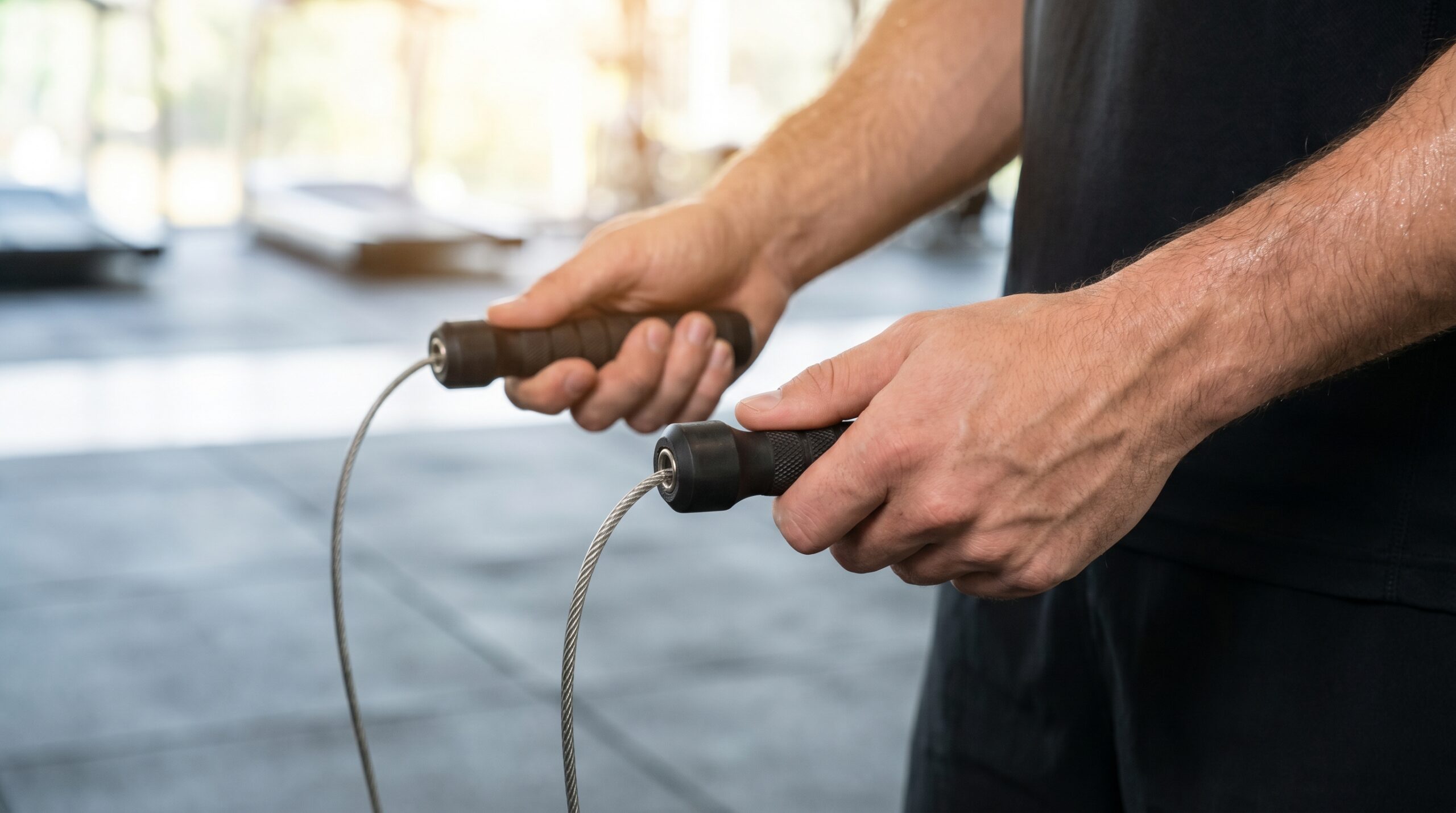
The weighted rope for muscle strengthening
The opposite of pure speed is the weighted rope. Here, the aim is not speed, but resistance. There are two variants: weighted handles (which tire the grip) or, far more effective, weighted rope (which weighs between 400 grams and over a kilo).
The use of a heavy cable completely modifies the exercise. The centrifugal force generated demands intense upper-body contraction. It’s an exceptional tool for strengthening the shoulders, trapezius, forearms and abdominal muscles. Combat sports enthusiasts love it to develop a strong guard and shoulders capable of withstanding endless rounds.
PVC rope for beginners
If you’re taking your first steps in rope skipping, the thin steel cable is likely to punish you every time you make a mistake (the famous whiplashes on your shins). That’s where PVC or vinyl rope comes in. Thicker (generally 4 to 5 mm) and slightly heavier than a speed rope, it turns a little more slowly.
This relative slowness is a huge advantage for the beginner: it helps to “feel” the rope’s position in space. The haptic feedback and the characteristic sound of the PVC splitting the air help the brain to synchronize the jump with the rotation. It’s the ultimate basic fitness equipment for building a good foundation before moving on to steel.
Our tips for getting started and avoiding injury
Getting equipped at GladiatorFit is the first step. The second is mastering the technique to preserve your joints and jump efficiently, without wasting energy.
The ideal posture for efficient jumps
Poor technique quickly leads to calf, knee or lower back pain. The aim is to be relaxed but sheathed. Here are the steps to perfect posture:
- Keep your head straight and your gaze fixed far ahead, don’t look at your feet.
- Keep your elbows close to your ribs, pulled back slightly.
- The movement must come exclusively from the rotation of your wrists, not from your shoulders or arms.
- Bounce gently on the balls of your feet (forefoot). Your heels should almost never touch the ground.
- Jump just high enough to let the cable through (1 to 2 centimetres is enough). No need to bend your knees backwards like a spring.
- Keep your knees slightly bent to cushion each landing.
Choosing shock-absorbing shoes and flooring
Jumping barefoot on tiles or concrete is a guaranteed recipe for tibial periostitis (shin splints) and tendonitis. The impact, however slight, is repeated hundreds of times.
Choose sports shoes with good cushioning in the forefoot area, but don’t choose running shoes that are too thick and make you less stable. Most importantly, pay attention to the surface you’re training on. Choose a soft floor such as floating parquet, an athletics track or, ideally, rubber tiles specially designed for sports. These absorb a large part of the shockwave and protect your joints in the long term.
Frequently asked questions about skipping
Is it a good idea to jump rope every day?
It’s generally not recommended to jump rope every day, especially if you’re a beginner. Although it’s an excellent exercise, the daily repetition of impacts puts a heavy strain on the joints, Achilles tendons and calves. To avoid wear-and-tear injuries such as periostitis, it’s best to space out your sessions (3 to 4 times a week) to give your tissues time to recover. If you’re an advanced crosstraining athlete, you can incorporate it into your daily warm-ups in small doses.
Does skipping rope make you lose weight?
Yes, it’s one of the most effective exercises for weight loss, provided it’s combined with a calorie deficit through diet. Because it engages the whole body and rapidly increases heart rate, it burns a large number of calories in record time. What’s more, when practiced as HIIT (high-intensity interval training), it boosts your metabolism, enabling you to continue burning fat even at rest.
How much does 10 minutes of skipping rope burn?
On average, 10 minutes of rope skipping at moderate to high intensity will burn between 100 and 150 calories, depending on your body weight and basic metabolism. For someone weighing 70 kg who trains at a sustained pace (over 120 jumps per minute), the expenditure may even be slightly higher. The time/calories burned ratio far surpasses that of conventional running or indoor cycling.
What are the disadvantages of skipping rope?
The main drawback is the repeated impact on the lower limbs (ankles, knees, hips). This can be problematic for people with joint problems, back pain or severe obesity. Another drawback is the learning curve: it requires coordination and can be frustrating at first (cable whip). However, these disadvantages can be largely mitigated by investing in the right equipment, jumping on a shock-absorbing floor (such as rubber tiles) and adopting impeccable technique (light bounces on tiptoe).
To round off this guide, here are the precise answers to the questions most frequently asked by athletes of all levels about this training method.
Discover our selection of sports equipment
Find all the equipment you need to reach your goals on GladiatorFit.ch

Other articles


Newsletter
Receive our fitness tips and exclusive offers


