


The Benefits of Jumping Rope: A Guide and Tips for Getting Started
If you think this accessory is just for the playground, think again. Professional athletes, martial artists, and fitness enthusiasts use it every day for a very good reason. Exploring the benefits of each jump rope is the first step toward understanding why this minimalist tool is arguably one of the most powerful for transforming your body. At GladiatorFit.ch, your Swiss sports equipment specialist, we know that a good workout always starts with the right equipment and the right technique.
In this comprehensive guide, we won’t just list the benefits of this exercise. We’ll explain in detail how your body’s physiology reacts to each jump, how to avoid injuries that slow your progress, and, most importantly, how to choose the rope that’s perfectly suited to your needs from our catalog. Whether your goal is to lose weight, improve your endurance, or prepare for your next cross-training competition, get ready to rediscover jump rope from a truly expert perspective focused on your results.
The Main Health Benefits of Jumping Rope
Incorporating jump rope into your workout routine doesn’t just change your physical appearance—it literally transforms how your body functions. The benefits affect multiple systems in your body, from blood circulation to bone density. Let’s take an in-depth look at what happens beneath your skin when you jump rope.
A major benefit for endurance and the cardiovascular system
The first noticeable effect is on your heart and lungs. Jumping rope is a high-intensity plyometric exercise. Within the first few minutes, your heart rate increases significantly to supply oxygen to all your moving muscles. This intense workout helps you build exceptional cardiovascular endurance in record time.
In addition, the bouncing motion on your tiptoes activates what’s known as the “calf muscle pump.” With each contraction, your calves propel blood upward toward your upper body, drastically improving venous return. This is great news if you suffer from heavy legs or are looking to optimize your overall blood circulation. With regular practice, your heart becomes stronger, your breathing deepens, and your resting heart rate decreases—all signs of a cardiovascular system in excellent health.
Burn calories and promote overall weight loss
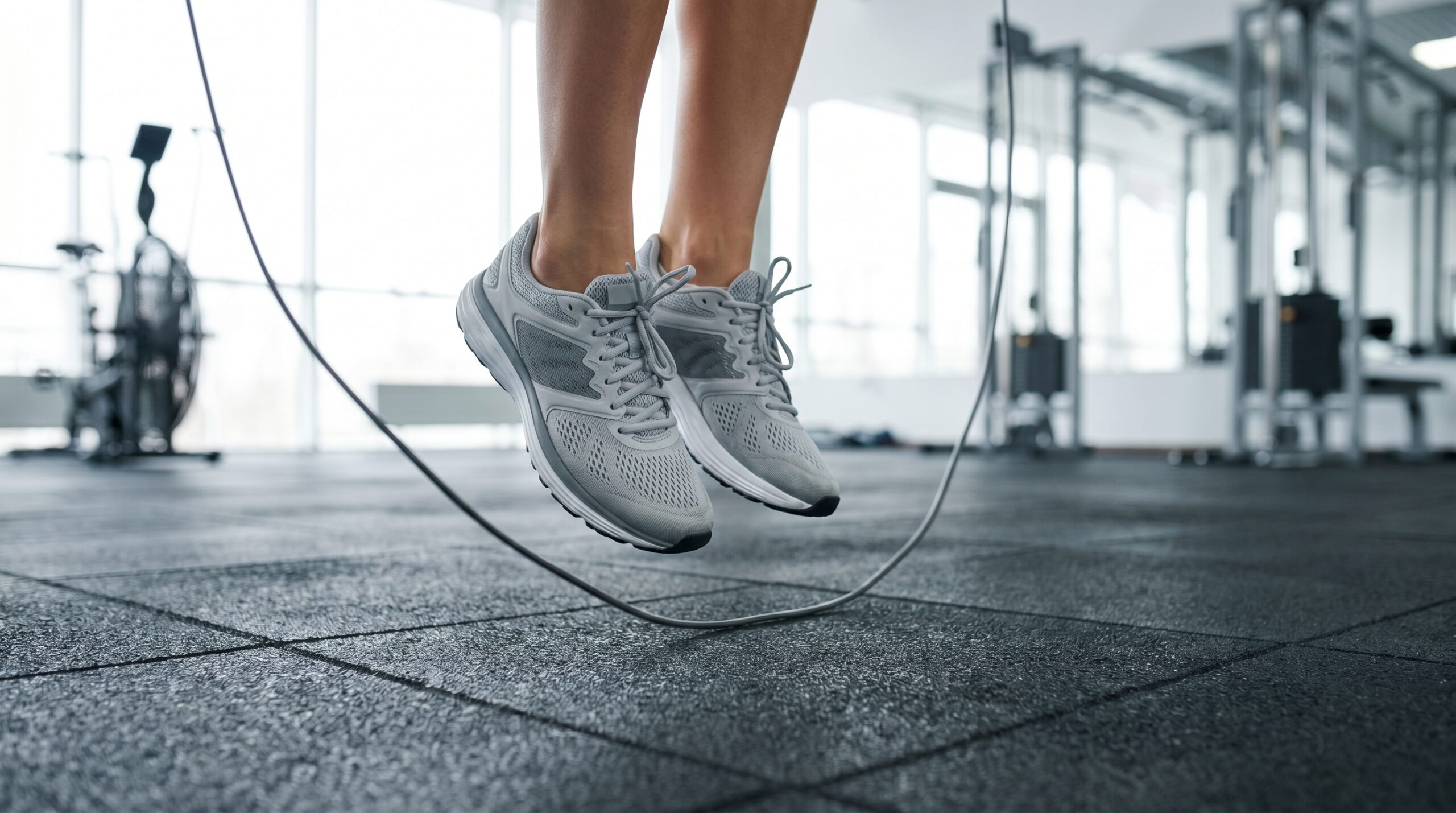
If your goal is to slim down, you’ve found your best ally. The calorie burn from this exercise is simply phenomenal. Depending on your body weight and the intensity of your workout, one hour of this exercise can help you burn up to 1,000 kcal. By way of comparison, 10 to 15 minutes of intense jumping is equivalent to about 30 minutes of running at a moderate pace.
But the benefits don’t stop when your workout ends. Thanks to the intensity of the workout, you trigger the “afterburn” effect (EPOC—Excess Post-exercise Oxygen Consumption). Your metabolism stays elevated for several hours after your workout, which means you keep burning fat even while resting or taking a shower. This is one of the most effective ways to create the calorie deficit needed for overall weight loss, while preserving your muscle mass.
Improve coordination and bone density
Beyond just your heart and calories, jumping requires perfect coordination between your eyes, hands, and feet. This constant neuromuscular work will significantly improve your agility and coordination. Your brain must constantly calculate the rotation rate and the exact moment to jump. This enhanced proprioception has a positive impact on your other sports activities and your everyday movements.
At the same time, repeated impacts—even if they’re light when performed correctly—send a mechanical signal to your bones. According to Wolff’s law, bone tissue adapts to the stresses it undergoes by becoming denser and stronger. As a result, this practice is an excellent way to prevent osteoporosis and age-related bone density loss. It’s a full-body workout that literally strengthens your body from the inside out.
How to Get Started and Exercise Without Getting Injured
Knowing the benefits of each type of jump rope is motivating, but jumping in without proper preparation is the surest way to injure your knees, ankles, or calves (tibial periostitis). Perfect technique and a suitable environment are crucial for long-term participation.
Proper Posture and the Ideal Jumping Technique
The key to an effective, pain-free workout lies in moving gently. You shouldn’t try to jump high. Here are the basics for a safe posture:
- Keep your head straight and your gaze fixed far ahead, don’t look at your feet.
- Keep your back straight, your core engaged, and your shoulders relaxed and pulled down.
- Keep your elbows close to your sides. It’s your wrists that should be turning the rope, not your whole arms.
- Land each step exclusively on the balls of your feet (the forefoot). Your heels should never touch the ground.
- Bend your knees very slightly to absorb the impact; your legs should never be stiff.
Choosing the right shoes and jumping surface is just as important. Avoid jumping barefoot or in socks on concrete. Opt for athletic shoes that provide good cushioning in the forefoot. Ideally, jump on a shock-absorbing surface, such as a fitness mat, a rubber gym floor, or a suspended wooden floor. On GladiatorFit.ch, you’ll also find shock-absorbing tiles that are perfect for creating a safe workout area at home.
Incorporating the jump rope into a cross-training session
To avoid monotony, the best approach is to incorporate this accessory into a variety of circuits. In cross-training, it’s often used to raise your heart rate between strength exercises. You can use it as a 5-minute dynamic warm-up to wake up your nervous system and lubricate your joints before lifting weights.
Here’s an example of a mini-metabolic circuit (12-minute AMRAP format: do as many rounds as possible):
- 50 single-jump rope jumps.
- 15 bodyweight squats.
- 10 push-ups.
- 5 pull-ups or ring rows.
This type of workout helps tone your muscles while keeping your respiratory demand very high, thereby maximizing your overall results.
Choosing the Right Equipment to Maximize Results
One of the most common mistakes is thinking that a plastic rope bought at the supermarket will do the trick. To get real results, your fitness equipment needs to be tailored to your fitness level and goals. At GladiatorFit.ch, we offer a variety of product lines designed for specific uses.
The speed rope for experienced athletes
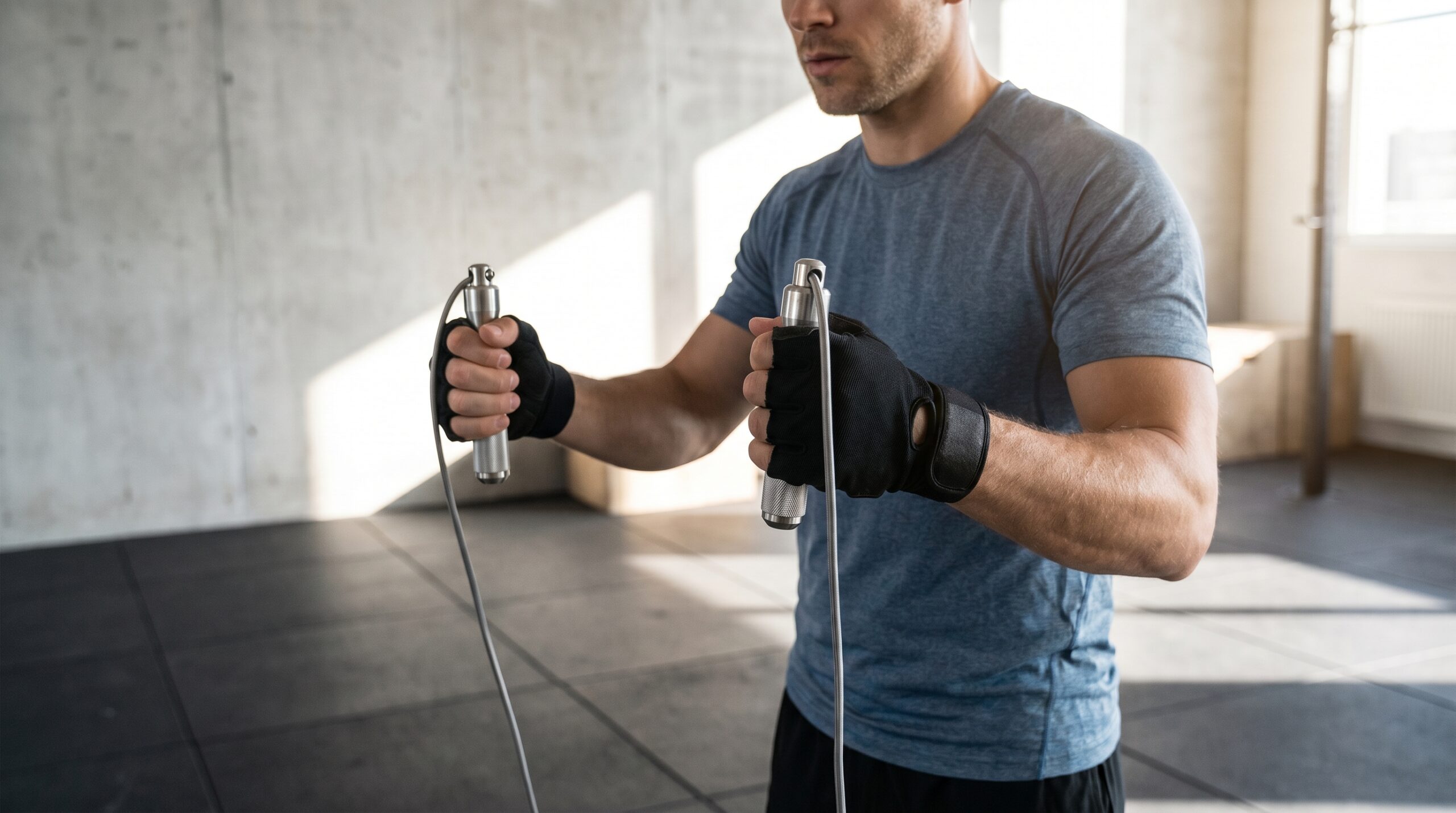
If your goal is to master “double unders” (making the rope pass under your feet twice in a single jump) or to improve your times in competition, a speed rope is essential. It’s typically made of a thin steel cable covered in PVC or nylon, with lightweight handles made of aluminum or sturdy plastic.
The key feature that sets these high-quality models apart is the inclusion of multidirectional ball bearings in the handles. These bearings ensure ultra-smooth, fast, and frictionless rotation. The cable never gets tangled, allowing you to reach extreme rotation speeds with minimal wrist effort.
Weighted or leather ropes for fitness and toning
If you’re looking to increase the muscular challenge of your workout, opt for heavier models. Leather ropes or thick PVC ropes offer more resistance in the air. They’re great for beginners because they help you “feel” the rotation better and find your rhythm more easily.
For those who really want to tone their upper-body muscles (shoulders, forearms, back), weighted ropes are the ultimate choice. They may feature removable weights built directly into the handles, or have a cable that’s intentionally heavy (up to 1 kg or more). The effort required to maintain the rotation makes this a formidable strength-training exercise as well as a cardio workout.
Common Mistakes That Hinder Progress
Even with the best Swiss sports equipment at your disposal, certain bad habits can ruin your experience and limit the expected benefits. Here’s what you absolutely must correct.
Jumping too high or using your arms too much
This is the number one mistake beginners make: jumping really high while bending their knees toward their chest, or swinging their arms in wide circles from the shoulders. These movements waste a tremendous amount of energy and lead to premature exhaustion in less than a minute.
Remember: the rope is only a few millimeters thick. A jump of two to three centimeters off the ground is more than enough. As for the rotational movement, it should be confined to your wrists. Your shoulders should remain low and stable, and your elbows should stay close to your waist. Conserving energy is the key to lasting the full duration and reaping the benefits of your workout.
To have a rope that doesn't fit properly
A rope that’s too long will hit the ground far in front of you and bounce back into your feet. A rope that’s too short will hit your shins or force you to hunch over, ruining your posture. Adjusting the length is therefore a must.
Here’s a simple way to properly adjust your gear:
- Place one foot exactly in the center of the cable.
- Pull the handles up along your body.
- For a beginner, the base of the handles should be at armpit or nipple level.
- As your technique improves, you can gradually shorten the cable until the handles are just below your pectorals, to increase your speed.
Most of the models sold on GladiatorFit.ch are equipped with quick-adjust screws that let you adjust the length to the nearest millimeter and cut off any excess cable.
Frequently Asked Questions About Using a Jump Rope
Does jumping rope help you lose belly fat?
Yes, but only indirectly. It’s impossible to target fat loss in specific areas. However, this exercise burns a very high number of calories. When done regularly and combined with a balanced diet, it creates a calorie deficit that will reduce your body’s overall fat mass, including abdominal fat. In addition, the constant core engagement required to maintain your posture during the jumps helps tone the transverse abdominis muscle, giving you a visually flatter and firmer stomach.
Which part of the body does jumping rope work out?
This is a truly full-body exercise. It places a heavy load on the lower body, particularly the calves (for propulsion and cushioning), the quadriceps, the hamstrings, and the glutes. The core is constantly engaged to stabilize the torso. Finally, the upper body gets a good workout too: the shoulders (deltoids), forearms, wrists, and trapezius muscles work continuously to ensure the cable rotates smoothly, especially if you’re using a weighted model.
How long does a jump rope last?
The duration depends on your level and your goals. For a complete beginner, 5- to 10-minute sessions (alternating between jumping and rest periods) are enough to get your joints used to the movement. An intermediate practitioner can aim for 15- to 20-minute sessions. For advanced athletes looking to burn a lot of calories, a dedicated session can last 30 to 45 minutes. It’s always better to prioritize quality of execution and intensity over a short period rather than a long session with poor technique.
Is it a good idea to jump rope every day?
If you’re a beginner, it’s not recommended to do this every day. The repeated impact on your ankles, knees, and shins requires some time to adjust. Start by doing it 2 to 3 times a week to give your muscles and bones time to recover and get stronger. Once your body has adjusted and your landing technique is flawless, you can practice daily—for example, as a 10-minute warm-up routine before your other workouts.
Discover our selection of sports equipment
Find all the equipment you need to reach your goals on GladiatorFit.ch

Other articles



Newsletter
Receive our fitness tips and exclusive offers


