Gym floor tiles: buying guide and comparison
When embarking on the adventure of setting up a home gym, the first thought often goes to the squat cage, the bench or the dumbbells. However, the foundation of your training space is literally what lies beneath your feet. Choosing the right gym floor is not a question of aesthetics, but an absolute technical necessity to guarantee the safety of your equipment, the integrity of your home and the quality of your performance.
At GladiatorFit, we all too often see athletes investing in top-of-the-range equipment while neglecting their sports flooring. The result: cracked tiles, damaged flooring and bars that bounce dangerously. In this expert guide, we’ll take a look at everything you need to know to transform an ordinary room into a professional training area worthy of Switzerland’s top fitness studios.
Why flooring is crucial for your home gym
It’s tempting to think that a simple yoga mat or carpet will suffice. This is a costly mistake. An engineered floor performs three vital functions that home coverings simply can’t provide.
Protecting your original floor from impact
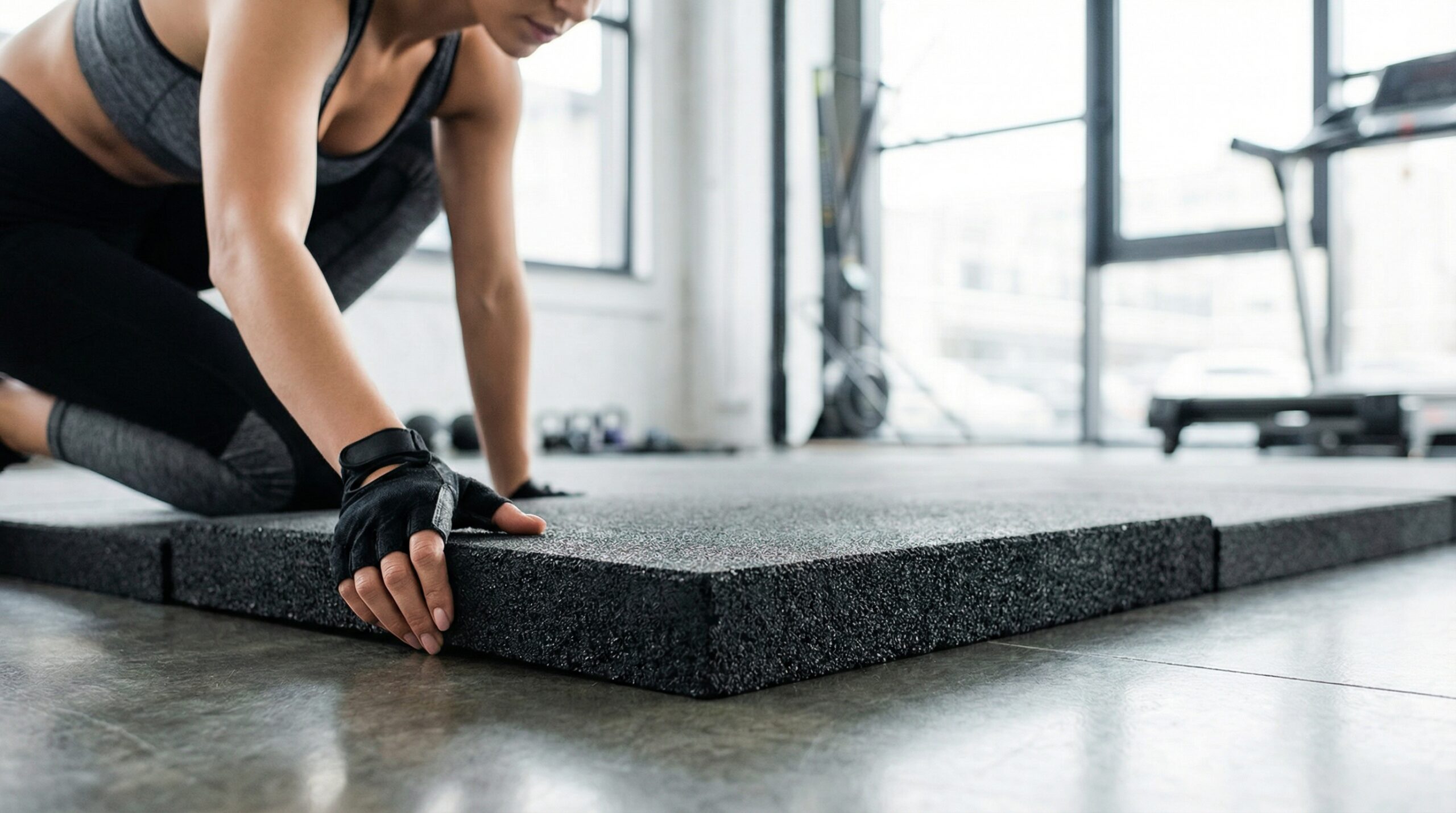
Whether you’re training in your garage on a concrete slab, in your living room on parquet or in a tiled cellar, the impact of a dropped weight is violent. A 100 kg load dropped from hip height generates considerable kinetic energy. Without adequate fitness floor protection, this shock wave passes through the equipment and propagates directly into the original floor.
A quality shock-absorbing tile acts like a shield. It absorbs kinetic energy and disperses it horizontally through its rubber structure, rather than allowing it to strike the supporting floor vertically. It’s the difference between an inconsequential thud and an irreversible crack in your tiles.
Reduce noise and vibrations
If you have neighbors or family living above your gym, sports soundproofing becomes your number one priority. The sound of clashing weights (airborne noise) is one thing, but impact noise (structure-borne noise) is much harder to deal with. Vibrations propagate through the very structure of the building.
A high-density rubber floor has viscoelastic properties. This means it breaks the propagation of sound and vibration waves. By installing thick slabs, you mechanically decouple your impact zone from the rest of the building, making your deadlift sessions much more discreet.
Improve support stability and safety
Beyond protection, the floor plays a key role in your performance. A floor that’s too soft (like a thick foam mat) creates instability underfoot, increasing the risk of ankle or knee sprains during heavy squats. Conversely, a slippery floor (tiled or varnished wood) is dangerous as soon as you start to sweat.
Technical slabs offer the perfect compromise: they’re firm enough to transmit your strength without excessive compression, but offer superior grip to lock in your support, even in wet conditions.
Technical criteria for selecting your tiles
Not all black floors are created equal. To make the right choice on GladiatorFit.ch, you need to understand the technical specifications that differentiate a professional tile from a low-end product.
Which thickness to choose according to impact?
This is the most frequently asked question. Thickness is directly correlated with shock absorption capacity. Here’s a general rule to guide your choice:
- 10mm to 15mm: Ideal for guided machine areas, benches and cardio areas. It’s a basic protective layer against scratches and wear, but won’t suffice for bar drop.
- 20mm to 25mm: The standard for crosstraining and multi-purpose weight training. This thickness makes it possible to drop moderate dumbbells (up to 30-40kg) and bars loaded with bumper discs without risking damage to the floor beneath. It’s the best value for money for most home gyms.
- 40mm and over: Indispensable for heavy weightlifting and competitive powerlifting. If you plan to regularly drop more than 100kg from shoulder height or overhead, or if you want impeccable acoustics, this is the thickness to turn to.
Rubber density and durability
Thickness isn’t everything. Density, often measured in kg/m³, is just as crucial. A thick tile with low density will crush too easily and crumble over time. For a durable body-building mat, we recommend a high density (generally around 900-1000 kg/m³).
A high-density rubber will not only resist crushing under the feet of your heavy racks, but will also have a smoother, less porous surface, making it much easier to clean and preventing perspiration from getting into the heart of the material.
Puzzle format or straight edges: which to choose?
The fastening system influences the aesthetics and stability of your home gym:
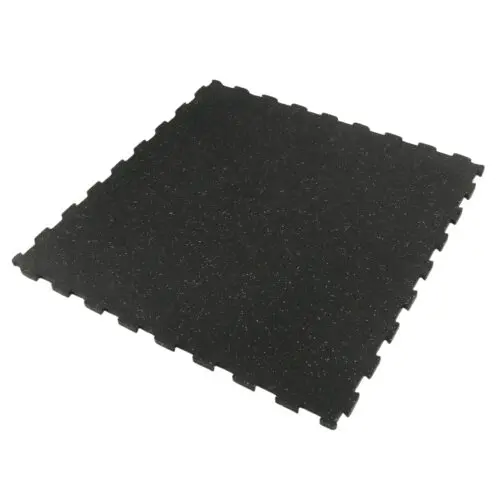
- Sport puzzle tiles: very popular for home installations, as they require no glue or adhesive. The interlocking teeth prevent the tiles from sliding against each other. Ideal if you ever need to dismantle or move your space.
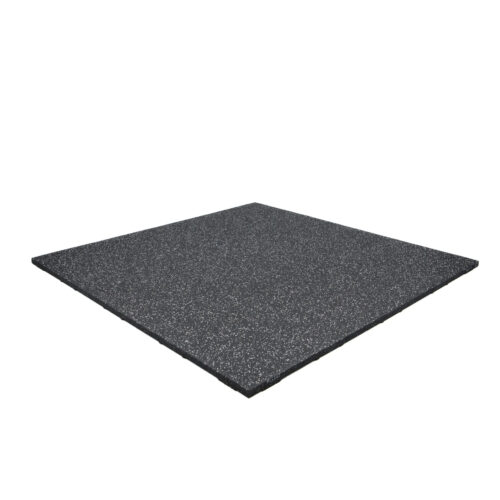
- Straight-edged tiles: These offer a more professional look, with few or no visible joints. However, they often need to be framed by walls or fastened with strong double-sided tape to prevent them from pulling apart with time and dynamic movement.
Adapt the type of floor to your sport
Your flooring should mirror your workout. A yoga room doesn’t have the same constraints as a crosstraining box.
For heavy weight training and weightlifting
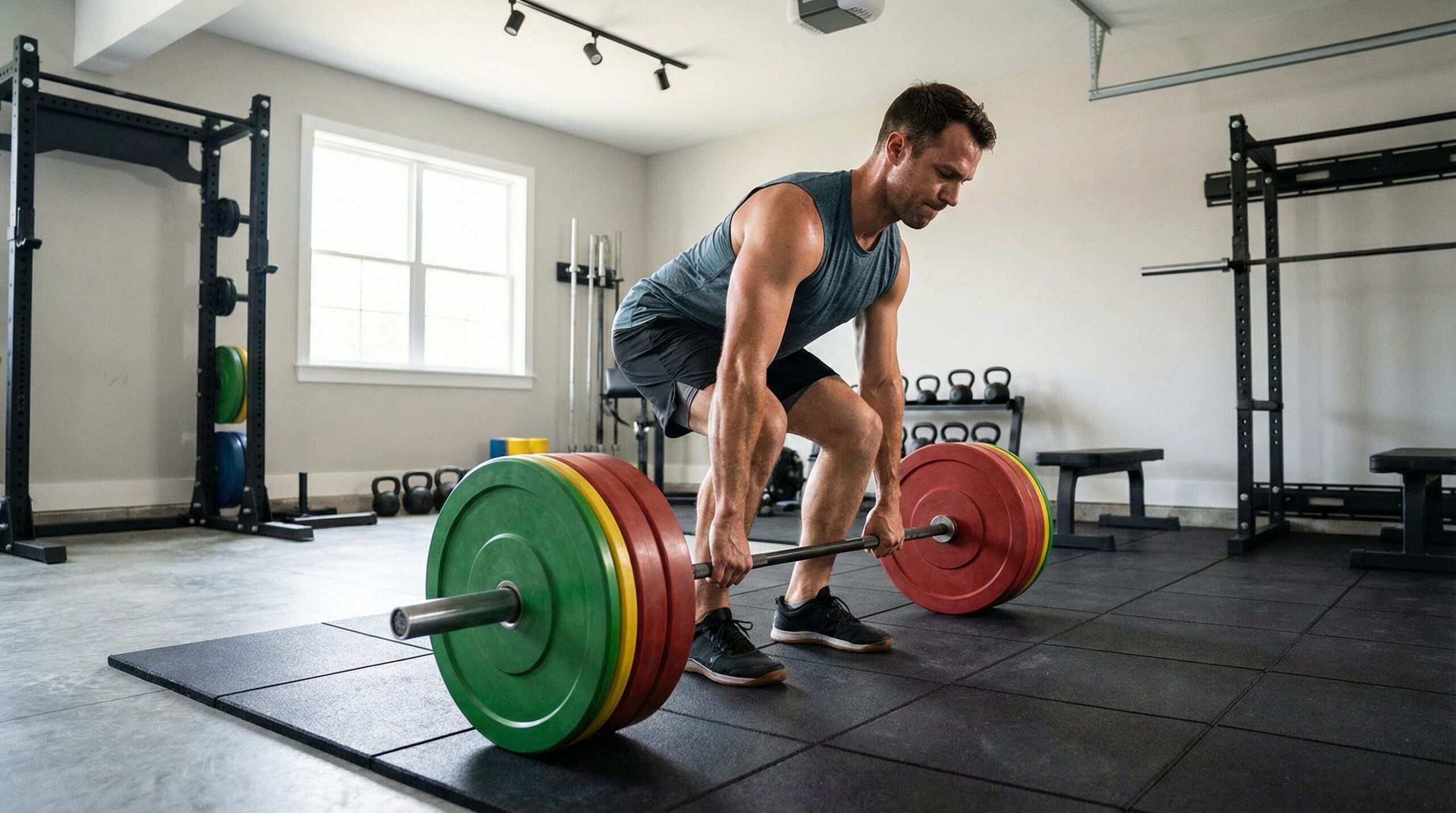
Here, the priority is maximum cushioning and equipment protection. Discs and Olympic bars are expensive; a floor that’s too hard can damage your bar bearings with every fall. You need cushioning tiles at least 25mm thick, ideally made of SBR (bonded crumb rubber) which offers excellent resilience.
For very heavy deadlift zones, you can even consider creating a specific “platform” by superimposing layers of wood and rubber for perfect rigidity under the feet and maximum cushioning under the discs.
For crosstraining and functional training
Crosstraining imposes a variety of constraints: jumps (plyometrics), running, heavy loads, gymnastics. The floor must be versatile. It mustn’t be too soft to absorb your energy when box jumps or skipping rope, but sufficiently protective for dumbbell drops.
A 20mm rubber floor is often the “sweet spot”. Make sure the surface is non-slip but not too abrasive, as you’ll be doing burpees or stretching on the floor. An excessively grainy texture can be unpleasant for the skin.
For cardio, yoga and light fitness
If your space is dedicated to exercise bikes, treadmills or yoga, heavy tiles are not mandatory. Thinner rubber rolls (6-8mm) or special mats are all you need to protect the floor from scratches and perspiration.
However, for yoga and stretching, cold, hard rubber is not ideal. It’s best to use a personal yoga mat over the surface, or opt for EVA foam tiles (note that EVA foam cannot withstand heavy loads and will definitely mark under the weight of the machines).
Installation and maintenance of your rubber tiles
Have you received your GladiatorFit tiles yet? Perfect. Proper installation will ensure the longevity of your floor.
How to lay your tiles correctly
Installation is simple, but requires a great deal of care. Here are the steps for a professional result:
- Preparation: The subfloor must be clean, dry and level. Vacuum carefully to avoid gravel creating a bump under the slab.
- Acclimatization: Rubber expands and shrinks with temperature. Leave your tiles in the room for 24 to 48 hours before laying them, to allow them to take on their final size.
- Laying: Start at a corner of the room if you’re using straight edges, or at the center if you want to center your space. Lay the tiles tightly together (compression).
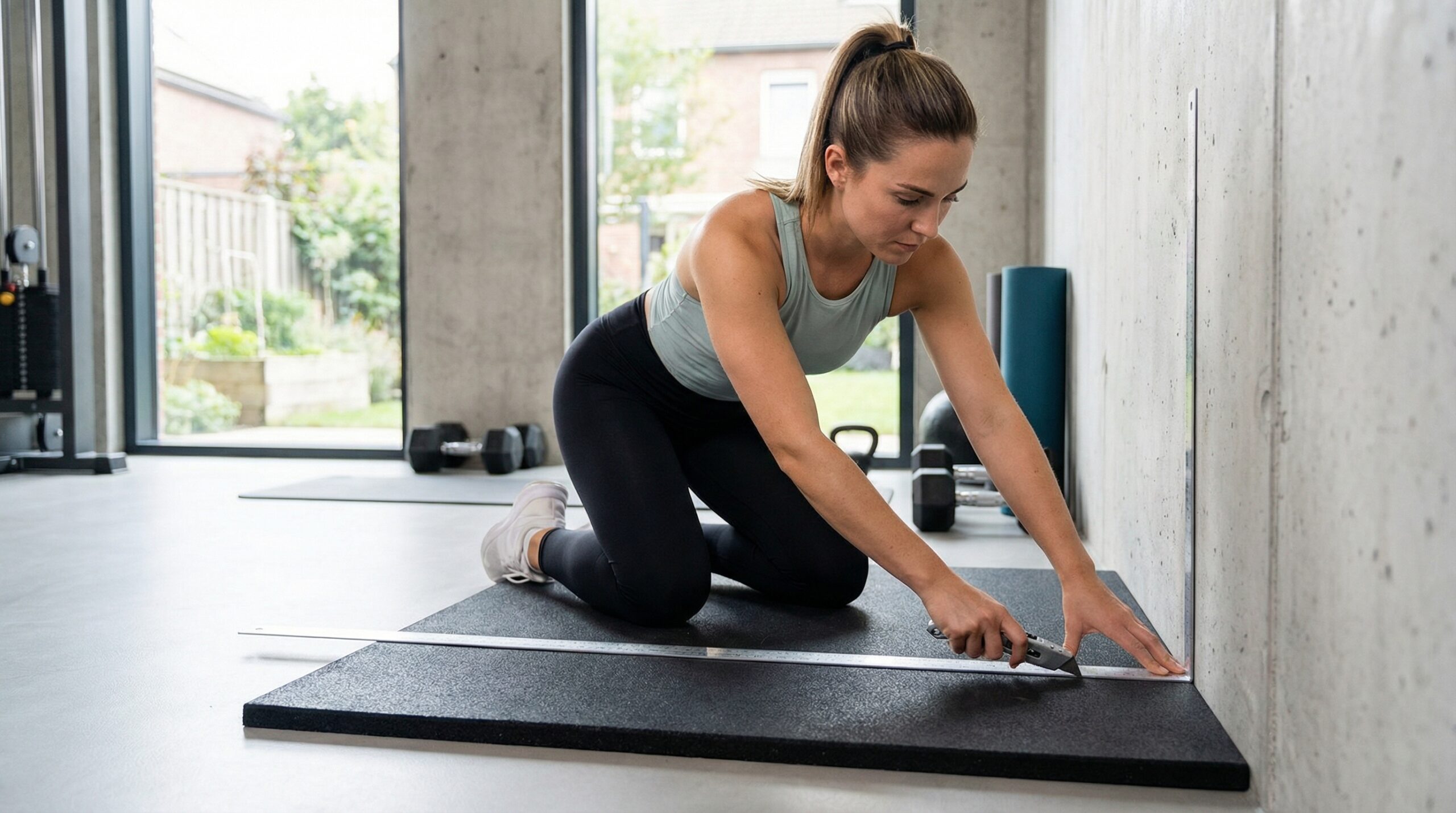
- Cutting: For edges, use a cutter with a new blade (such as a builder’s knife) and a metal ruler. Make several moderate passes, rather than forcing the cut all at once. Use a little soapy water on the blade to facilitate gliding through the dense rubber.
Cleaning and maintenance for a long service life
Rubber is tough, but certain chemicals can damage it. To clean your floor:
- Vacuum regularly to remove dust and magnesia from the pores.
- Wipe with a damp (not soaked) cloth.
- Use a pH-neutral cleaner. Absolutely avoid oil-based products, solvents, strong acids or bleach, which will degrade the rubber’s structure and make it crumbly or slippery.
- Leave to air dry.
Conclusion
Investing in a quality gym floor is not a superfluous expense; it’s the life insurance of your training space. Whether it’s for sound insulation, protection of your equipment or your own safety, the choice of thickness and density must be thought through according to your practice.
At GladiatorFit, we select surfaces tested to withstand the most intense workouts. Take the time to measure your space, assess your cushioning needs, and build your home gym on a solid foundation.
Frequently asked questions (FAQ)
What slab thickness for weight training?
For weight training involving free weights (dumbbells, bars), a minimum thickness of 20mm to 25mm is recommended. This is sufficient to protect the original floor and absorb moderate shocks. If you practice weightlifting or powerlifting with frequent barbell releases in excess of 100kg, opt for slabs of 40mm or more for optimum protection and acoustics.
How do I clean a rubber gym floor?
Cleaning should be done with a vacuum cleaner to remove dust, followed by damp mopping. Always use a pH-neutral detergent mixed with lukewarm water. Avoid aggressive products such as bleach, solvents or oil-based cleaners, which can degrade the rubber and make the floor slippery.
What flooring should be used in a home gym?
The best flooring for a home gym is high-density rubber (SBR). It offers the best compromise between floor protection, soundproofing and stability. Puzzle” type tiles are ideal for easy installation without glue, while rolls are suitable for very large surfaces. Avoid tiles (too fragile), BRUTE concrete (dusty and hard) or carpet (poor hygiene and stability).